You just hit the 12-week mark. Friends and family are congratulating you on being "3 months pregnant." But something feels off. You pull out a calendar, count the weeks, and think, "Wait, 4 weeks in a month, 12 divided by 4 is 3... that seems right. So why does my pregnancy app say I'm finishing my first trimester, not starting my second?"
Here's the short, direct answer you likely came for: Yes, 12 weeks pregnant is generally considered to be 3 months pregnant, but it's a rough, informal equivalence that doesn't match the precise medical timeline. The confusion stems from the fact that pregnancy is tracked in weeks, not months, and not all months have 4 weeks.
This mismatch causes more anxiety than it should.
What’s Inside This Guide
How Pregnancy is Actually Measured (It’s Not From Conception)
This is the most critical piece of the puzzle that most online articles gloss over. Your "pregnancy age" isn't calculated from the day you conceived or even from the day of a positive test.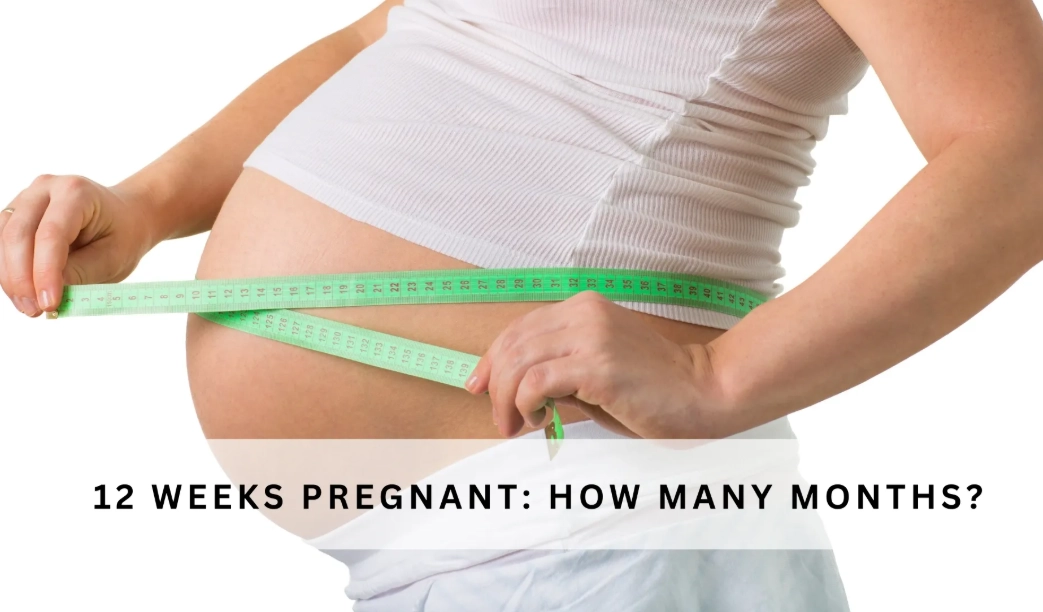
Healthcare providers worldwide use a standard called gestational age, which is calculated from the first day of your last menstrual period (LMP). This method is used because, for most people, the date of their LMP is more certain and easier to recall than the exact date of ovulation or conception.
Think about that for a second. On the first day of your last period, you weren't pregnant yet. This means gestational age includes about two weeks where you were not actually pregnant. It’s a historical convention that sticks because it creates a consistent starting point.
So, at 12 weeks gestational age, the embryo/fetus has been developing for roughly 10 weeks. This is sometimes called the fertilization age. When your doctor says "12 weeks," they always mean 12 weeks from your LMP.
Weeks vs. Months: The Math That Never Quite Works
Now, let's tackle the month problem. We want to fit the neat, 40-week pregnancy into nine months. But 40 weeks divided by 4 weeks per month equals 10 months. That can't be right, can it?
It's not. The error is assuming every month has exactly 28 days (4 weeks). Only February in a non-leap year does. Most months are 30 or 31 days long.
Let's do the math properly with a real calendar. If your last period started on January 1st:
- Weeks 1-4: Month 1 (January)
- Weeks 5-8: Month 2 (February)
- Weeks 9-13: Month 3 (March into early April)
See that? Week 12 falls squarely in the middle of the third month. By the strict calendar, you're not "3 months pregnant" until you complete week 13 and enter week 14. But in casual conversation, being in the third month gets rounded to "3 months pregnant."
The medical community doesn't use months for a good reason—it's too vague. They use trimesters.
| Trimester | Weeks (Gestational Age) | Approximate Month Range | Key Milestone at the End |
|---|---|---|---|
| First Trimester | Week 1 - Week 12 | Month 1 - Month 3 | Major organ development complete. Risk of miscarriage decreases significantly. |
| Second Trimester | Week 13 - Week 26 | Month 4 - Month 6 | Often called the "honeymoon" period. Fetal movement felt. |
| Third Trimester | Week 27 - Delivery (~40) | Month 7 - Month 9 | Rapid growth and brain development. Preparation for birth. |
This is why the 12-week point is such a big deal. You're at the final week of the first trimester. It's a major psychological and medical milestone, more significant than the shift from "month 2" to "month 3." Many people wait until after the 12-week scan to share their news publicly because the statistical risk of miscarriage drops notably, as noted in resources like those from the American College of Obstetricians and Gynecologists.
What to Expect at Your 12-Week Appointment?
Focusing solely on the month/week debate misses the real action happening at 12 weeks. This appointment is often one of the most memorable.
The NT Scan and Genetic Screening
Many have the nuchal translucency (NT) scan around now. It's an ultrasound that measures fluid at the back of the baby's neck. Combined with a blood test, it assesses the risk for certain chromosomal conditions. It's also usually the first time you see your baby looking like a baby, not a little blob. They might be bouncing around.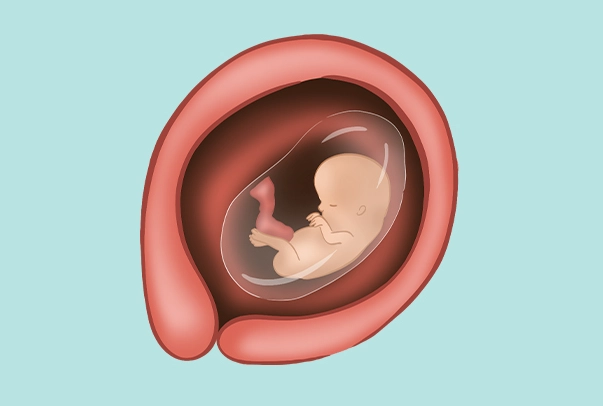
Physical Changes You Might Feel
By 12 weeks, the placenta is taking over hormone production. For many, this brings a welcome shift.
- Nausea may ease: That first-trimester sickness often starts to lift. If yours doesn't, it's not abnormal—everyone's timeline differs.
- Energy might return: The crushing fatigue can begin to fade.
- The "bump" may appear: For first-time parents, it might still be a "bloat bump," but for others, a true baby bump starts to show.
I remember my wife's 12-week appointment vividly. The relief of seeing a healthy, active baby on the screen completely overshadowed any thought about whether it was exactly 3 months. That's the perspective shift that matters.
Your Top Pregnancy Timeline Questions, Answered
So, is 12 weeks considered 3 months pregnant? In everyday talk, sure. But clinging to months will leave you constantly confused. Your doctor's office, pregnancy apps, and all medical literature speak the language of weeks and trimesters.
Embrace the weekly count. It's more precise, tracks perfectly with your baby's development, and aligns with every medical check-up you'll have. Celebrate making it to the end of the first trimester. That's the milestone that truly counts.
Focus on what's happening inside. At 12 weeks, your baby has all its major organs, is starting to move its limbs, and is about the size of a lime. That's a lot more exciting than debating calendar math.
Reader Comments