Let's cut straight to it. You're searching for answers because you're probably feeling something—maybe a twinge, some fatigue, or tender breasts—and you're wondering if it's a sign. The short, biologically honest answer is this: In the two weeks before a missed period, what you're feeling is almost certainly not a pregnancy symptom. It can't be, and understanding why is the key to managing the anxiety of the two-week wait.
I've talked to hundreds of people trying to conceive, and this confusion is the number one source of early hope and subsequent heartbreak. The problem isn't your intuition; it's a fundamental misunderstanding of how pregnancy is dated. Medicine throws a curveball: pregnancy is counted from the first day of your last menstrual period (LMP), not from conception. So when we talk about "2 weeks pregnant," fertilization hasn't even occurred yet. It's a head-scratcher, I know.
What's Inside: Your Quick Guide
What's Happening in Your Body Before 2 Weeks?
Forget everything you think you know about "weeks" for a second. Here’s the medical play-by-play, using the standard LMP dating method used by doctors and resources like the American College of Obstetricians and Gynecologists.
Week 1 & 2 of Pregnancy: You are not pregnant. Your body is preparing for ovulation. The follicle is developing, and estrogen is rising. Conception hasn't happened.
Around Day 14 (Ovulation): An egg is released. If sperm is present, fertilization can occur in the fallopian tube. This is now considered about 2 weeks pregnant on the medical calendar, but it's 0 weeks pregnant from conception.
Days 15-24 (The Journey & Implantation): The fertilized egg (now a blastocyst) travels to the uterus. Implantation—the burrowing into the uterine lining—typically happens between 6 to 12 days after ovulation. Let's say it happens on day 9 post-ovulation. At this point, you are medically about 3 weeks and 2 days pregnant. This is when the body starts producing the pregnancy hormone hCG, but levels are minuscule.
Day 28+ (Missed Period & Beyond): Your period is due. If implantation was successful, hCG levels are now rising more rapidly. This is week 4 of pregnancy. It's only now that hCG might be high enough to potentially trigger early symptoms in some people, and a home test might show a faint positive.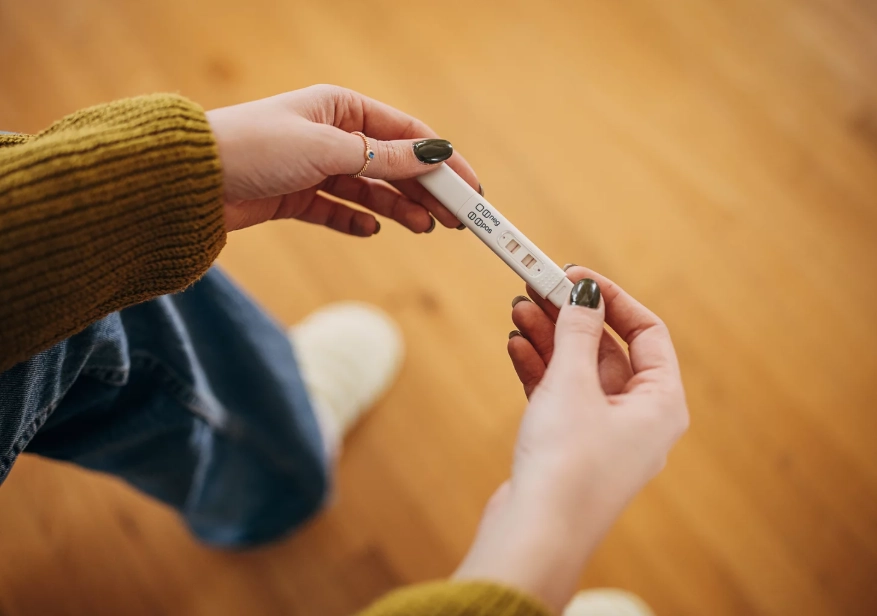
What You're Actually Feeling (And It's Not Pregnancy)
So if it's not pregnancy, what is it? Let's break down the likely culprits. I see this pattern all the time.
The Progesterone Effect
Progesterone is the great imitator. After ovulation, it rises to prepare the uterine lining. Its side effects are a perfect match for early pregnancy signs:
- Fatigue: Progesterone has a sedative effect. It makes you want to nap.
- Breast Tenderness: It stimulates breast tissue. They can feel full, sore, or heavy.
- Bloating: It slows down your digestive system.
- Mood Swings: It interacts with brain chemicals.
Every single cycle, your body produces this. When you're not trying to conceive, you might call it PMS. When you are hoping to be pregnant, every flutter becomes a "symptom."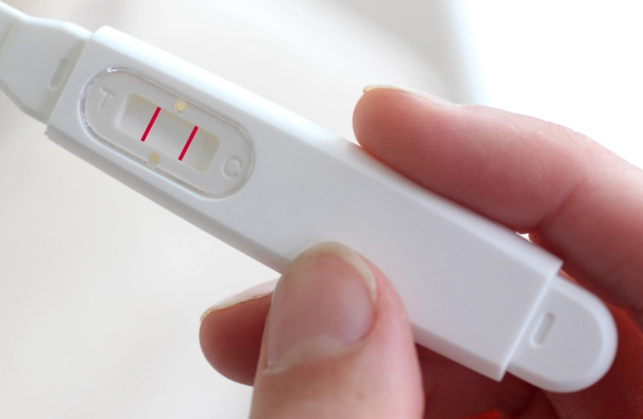
Heightened Awareness & The Power of Suggestion
This is the psychological side. When you're hyper-focused on your body, you notice sensations you'd normally ignore. A slight cramp that you'd usually shrug off becomes "implantation cramps." Normal post-ovulation pelvic fullness feels significant. Your brain is looking for clues, so it amplifies every signal.
Think about Sarah. She's 10 days past ovulation, her period is due in 4 days. She feels a wave of nausea after a strong coffee. "Morning sickness!" her mind whispers. In reality, it was the coffee on an empty stomach, something that happened last month too, but she didn't think twice about it. The context changes everything.
How to Tell Early Pregnancy Symptoms from PMS? (Spoiler: You Often Can't)
This is the million-dollar question. The brutal truth is that in the days before your missed period, there is no reliable way to distinguish based on feelings alone. The hormones causing the sensations are identical. However, there are a few nuances that some people report, but they are not guarantees.
| Symptom | More Common in PMS | More Common in Early Pregnancy (Post-Implantation) | Key Takeaway |
|---|---|---|---|
| Cramping | Often stronger, leads to menstrual flow. | Milder, intermittent "twinges" or pulling sensations. | Not a reliable differentiator. Many feel no cramps in early pregnancy. |
| Breast Tenderness | Often improves as period approaches. | May feel more persistent, with pronounced nipple sensitivity. | Progesterone causes both. The pattern is highly individual. |
| Fatigue | Very common. | Can be profound and sudden, like a "wall of tiredness." | Again, progesterone is the main driver. Hard to tell apart. |
| Nausea | Uncommon before a period. | One of the more distinctive early signs, but rarely before a missed period. | True pregnancy nausea (morning sickness) typically starts around week 5-6. |
| Bleeding/Spotting | Full menstrual flow. | Light implantation spotting (pink/brown, lasts 1-2 days). | Implantation bleeding is not universal. Light spotting can also be from hormonal fluctuations. |
See the overlap? It's massive. Relying on symptoms is a recipe for frustration. The only true differentiator is the presence of the hormone hCG, which a pregnancy test detects.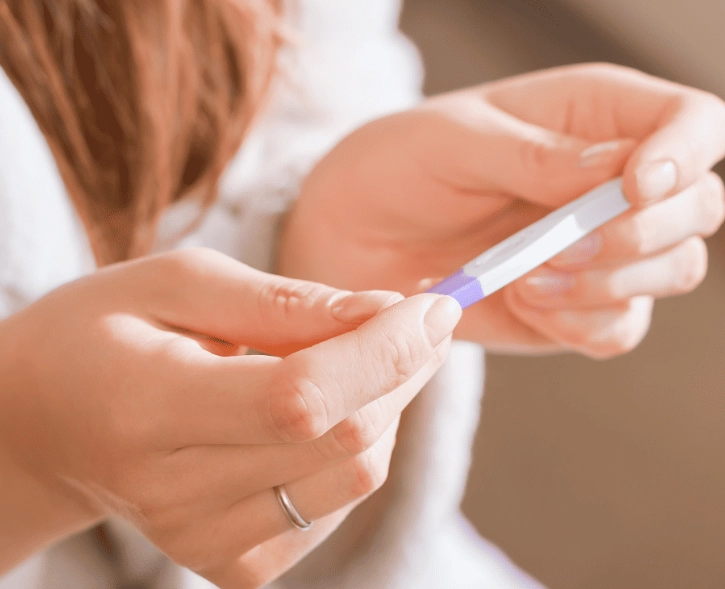
When to Test and What to Do Instead of Symptom-Spotting
So, what's the actionable plan? Ditch the daily body scan and follow a timeline based on science, not sensation.
Forget it. Implantation hasn't likely occurred. Any "symptom" is 100% progesterone or imagination. Save your money and mental energy. Do not test.
Implantation could be happening. hCG is just starting production. A test will almost certainly be negative, even if you are pregnant. The chance of a false negative is extremely high. I advise against testing here—it causes more stress than clarity.
This is the earliest reasonable time to test. If implantation happened, hCG should be high enough for a sensitive early detection test to pick up. Test with first-morning urine for the highest concentration. A negative here is more reliable, but if your period is irregular, it's not definitive.
This is the gold standard. A test taken on or after the day your period is due is highly accurate. According to the U.S. Department of Health & Human Services' Office on Women's Health, this is the recommended time for the most reliable result. A positive is almost certainly correct. A negative likely means you're not pregnant this cycle.
Instead of symptom-spotting, try to redirect that nervous energy. Go for a walk, watch a gripping series, start a light project. The two-week wait is brutal, but analyzing every bodily function makes it longer and more agonizing.
Reader Comments