Quick Navigation
- How Home Pregnancy Tests Actually Work (The Science, Simplified)
- Decoding the Lines: A Visual Guide to Every Possible Result
- Factors That Can Mess With Your Test Result
- Digital Tests vs. Line Tests: A Different Kind of Answer
- What To Do After You See the Lines: Your Next Steps
- Sensitivity Showdown: How Early Can Tests Detect Pregnancy?
- Frequently Asked Questions (The Stuff You're Secretly Searching)
- Final Thoughts: Trust, But Verify
You're standing in your bathroom, heart pounding, staring at a little stick. The wait feels endless. And then there they are... lines. But what do they mean? Is a positive pregnancy test 1 line or 2 lines? If you're scratching your head, you're definitely not alone. I've been there, and so have millions of other women. The instructions can be confusing, and that little window doesn't always give you a crystal-clear answer.
Let's cut through the confusion right now. The vast majority of home pregnancy tests work on a simple principle: one line means not pregnant, two lines mean pregnant. But (and it's a big but) it's rarely that simple in real life. You get faint lines, weirdly placed lines, lines that show up after the time limit. It's enough to make anyone want to throw the test in the trash and just go to the doctor.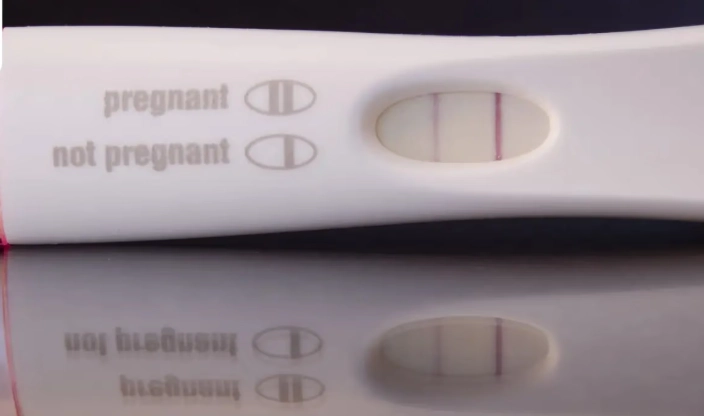
I remember helping a friend through this. She sent me a blurry photo at 7 AM asking, "Is this a second line or am I imagining it?" We spent an hour going back and forth. That experience taught me how badly a straightforward guide was needed. Not marketing fluff from a test manufacturer, but real talk.
How Home Pregnancy Tests Actually Work (The Science, Simplified)
Before we dive into line interpretation, knowing how the test works makes everything else make more sense. These tests detect a hormone called human chorionic gonadotropin, or hCG. Your body starts producing this hormone only after a fertilized egg attaches to the lining of your uterus (implantation).
The test strip contains antibodies that are designed to bind to hCG. If hCG is present in your urine, it binds to these antibodies, which then triggers a chemical reaction that produces a colored line in the "test" area (the T line). The "control" area (the C line) is there to show you the test worked properly—it should always show up if the test is valid.
So the logic is: Control line shows up = test is working. Test line also shows up = hCG was detected. That's the "two lines mean positive" rule. No hCG detected? Only the control line appears. You can find a detailed, scientific explanation of hCG and pregnancy from trusted sources like the Mayo Clinic.
It sounds foolproof, but the execution can be messy.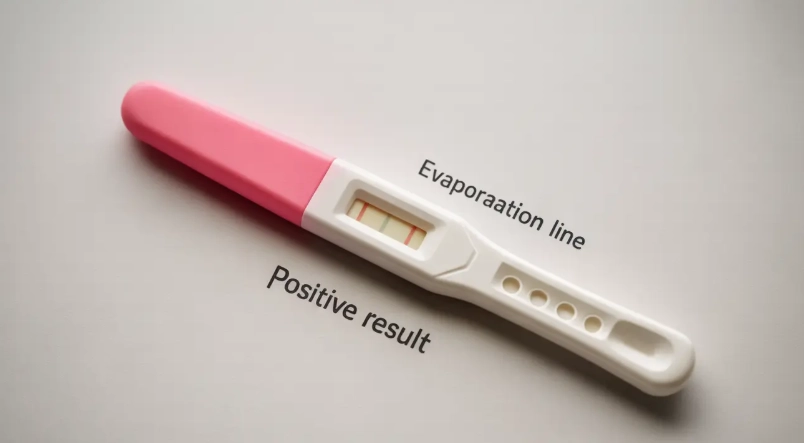
Decoding the Lines: A Visual Guide to Every Possible Result
This is where everyone gets stuck. Let's break down every scenario you might see in that result window.
The Clear-Cut Results (Rare, but They Happen)
Two Distinct, Colored Lines: This is a positive pregnancy test. Even if the second line (the test line) is lighter than the control line, it's still considered positive. A line is a line. The color intensity can vary based on how much hCG is in your urine, which relates to how far along you are. A faint line often means early pregnancy.
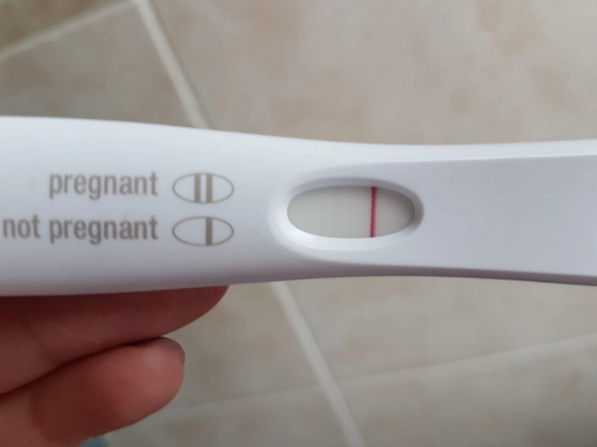
One Single, Clear Control Line: This is a negative result. No hCG was detected above the test's threshold. If your period is late and you see this, it could mean you tested too early, or your cycle is just off.
The Confusing, Gray-Area Results (The Usual Suspects)
Here's where the anxiety spikes. These results are why people search "is positive pregnancy 1 or 2 lines" in a panic.
The Faint Second Line: This is the biggest head-scratcher. If you see any second line with color—no matter how faint, thin, or wispy—it is technically positive. It indicates the presence of hCG. It's often called a "squinter." Why is it faint? Low hCG levels (very early pregnancy), diluted urine, or a less sensitive test. My personal take? A faint positive is still a positive. But you should confirm it in a day or two with another test, using first-morning urine which is more concentrated.
The Evaporation Line (The "Evap Line"): This is the villain of home testing. An evap line is a colorless, grayish streak that can appear in the test line area after the test has dried, and well outside the recommended reading time (usually 3-5 minutes). It's not a true positive. It's just the urine residue drying on the strip. The key difference? A true positive line has color (pink, blue, depending on the test) and usually appears within the time frame. An evap line looks colorless, like a shadow or an indent. Always read the result within the exact timeframe stated in the instructions!
No Lines at All: This means the test is invalid. The control line didn't show up, so the test didn't work. This could be due to not enough urine, a faulty test, or reading it incorrectly. Grab another test.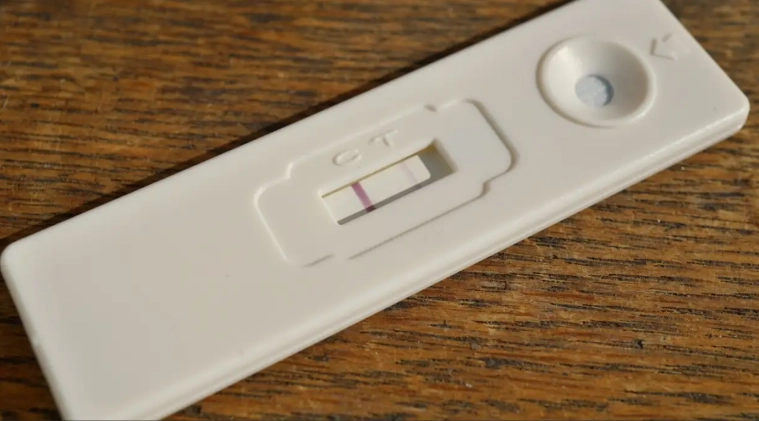
Factors That Can Mess With Your Test Result
It's not just about the lines. Several things can influence what you see, making you question whether a positive pregnancy is 1 or 2 lines.
- Testing Too Early: This is the #1 reason for confusing results. If you test before implantation has occurred or just after, your hCG levels might be too low for the test to pick up clearly, leading to a false negative or a very faint line. The American College of Obstetricians and Gynecologists (ACOG) recommends waiting until the first day of your missed period for the most accurate result.
- Diluted Urine: Drinking a lot of fluids before testing dilutes your urine and the hCG in it. For the most concentrated hCG levels, use your first-morning urine.
- Test Sensitivity: Tests are rated in mIU/mL (milli-international units per milliliter). A lower number means higher sensitivity (e.g., 10 mIU/mL is more sensitive than 25 mIU/mL). A more sensitive test may show a faint positive earlier than a less sensitive one. Check the box.
- Medications: Fertility drugs containing hCG (like Pregnyl) can cause a false positive. Most other medications, including antibiotics and birth control, do not affect pregnancy test results. When in doubt, check with your doctor or pharmacist.
- Chemical Pregnancy: This is an early pregnancy loss that happens shortly after implantation. It can cause a faint positive or a positive test followed by a negative and then your period. It's more common than people realize.
Digital Tests vs. Line Tests: A Different Kind of Answer
All this line drama is why digital tests became popular. They have a little screen that spells it out: "Pregnant" or "Not Pregnant." No squinting required. But how do they work?
Inside, they have the same basic strip technology. But instead of you interpreting the lines, an optical reader inside the device does it. If it detects a certain threshold of hCG (creating that second line internally), it triggers the "Pregnant" message.
The trade-off? They're often less sensitive than the best line tests. They might need a slightly higher level of hCG to give a positive reading. They're also more expensive. Some women use a cheap line test first for early detection, then confirm with a digital for clarity.
So, if you're asking "is positive pregnancy 1 or 2 lines" and using a digital, the answer is a word, not a line count. But the principle underneath is identical.
What To Do After You See the Lines: Your Next Steps
Okay, you've read the test. Now what? Here's a practical, step-by-step guide based on your result.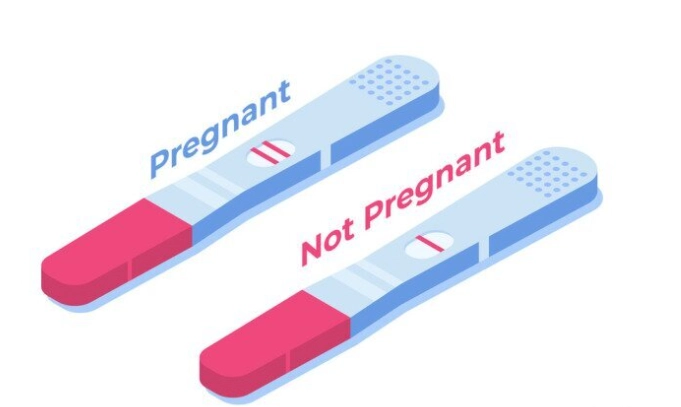
If You See Two Lines (Even a Faint One):
- Don't Panic (Easier said than done, I know). Take a deep breath.
- Confirm. Wait 24-48 hours and test again with first-morning urine. In early pregnancy, hCG levels roughly double every 48 hours. You should see a darker, clearer second line on the next test if you are pregnant.
- Schedule an Appointment. Call your doctor, OB-GYN, or a local clinic to schedule a confirmation appointment. They will likely do a blood test, which is quantitative and can measure the exact amount of hCG, giving more information than a yes/no urine test.
- Start (or continue) taking a prenatal vitamin with at least 400 mcg of folic acid, which is crucial for early fetal development. The CDC has clear recommendations on this.
If You See One Line (Negative), But Your Period is Late:
- Consider the timing. Did you test too early? Ovulation can be later than you think in any cycle.
- Test again in 3-5 days if your period still hasn't arrived.
- Look at other factors: Stress, illness, significant weight change, polycystic ovary syndrome (PCOS), and thyroid issues can all delay a period.
- If you go several weeks without a period and continue to get negative tests, it's wise to consult a healthcare provider to figure out why.
Sensitivity Showdown: How Early Can Tests Detect Pregnancy?
Not all tests are created equal. If you're testing early, sensitivity is everything. Here’s a quick look at how some common types stack up. Remember, a lower mIU/mL number means it can detect lower levels of hCG, and thus, a pregnancy earlier.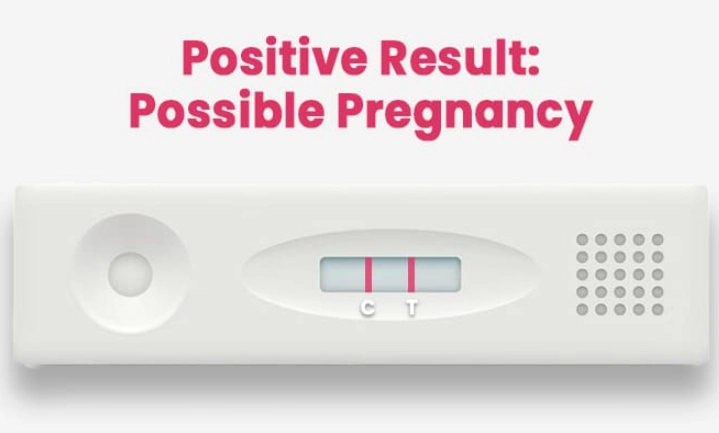
| Test Type / Brand Examples | Typical Sensitivity (mIU/mL) | Can Detect Pregnancy Approximately... | Notes |
|---|---|---|---|
| Early Result / Early Detection Tests (e.g., First Response Early Result) | 6.3 - 10 | 5-6 days before your missed period | Designed for early testing. Often more expensive. Faint lines are common if testing this early. |
| Standard Midstream Tests (e.g., Clearblue, EPT, store brands) | 20 - 25 | On the day of your missed period | The most common type. Good balance of accuracy and cost. |
| Bulk Test Strips (Dip strips bought online) | 10 - 25 | Varies – check package | Extremely cost-effective. Require you to collect urine in a cup. |
| Digital Tests | 25 - 50 | On or after the day of your missed period | Least sensitive, but clearest readout. Best for confirmation, not early detection. |
See the range? That's why one woman might get a faint positive at 9 days past ovulation (DPO) with a super-sensitive test, while another using a standard test gets a negative at 12 DPO. It doesn't necessarily mean one isn't pregnant; it means their tests have different detection thresholds.
Frequently Asked Questions (The Stuff You're Secretly Searching)
Final Thoughts: Trust, But Verify
Home pregnancy tests are amazing tools for privacy and early knowledge. But they are screening tools, not diagnostic tools. They give you a very good indication, but they are not infallible.
My biggest piece of advice? Use them as the first step, not the last word. If you get a confusing result—a faint line, a line that appears late—don't let it spin you into days of anxiety. Get another test from a different brand or type. Use first-morning urine. Follow the instructions to the letter.
And then, take that result to a professional. A healthcare provider can give you a definitive answer with a blood test and start you on the right path for prenatal care or discuss other options if that's your situation.
Remember, whether a positive pregnancy is 1 or 2 lines is just the beginning of the story. The lines are a signal. What you do with that information—the care you seek, the choices you make—is what really matters.
Reader Comments