What We’ll Cover
Let's be honest. That waiting period, the wondering, the constant mental math about your cycle—it can be agonizing. Whether you're hoping for a positive or dreading one, the question burning in your mind is simple: what's the quickest way to tell if I'm pregnant? You want an answer, and you want it now.
The short, somewhat frustrating answer is: it depends. It depends on your body, your cycle, and the method you use. But the real answer, the useful one, is about understanding the science behind pregnancy detection so you can choose the fastest and most reliable path for you. This isn't about magic tricks or old wives' tales. It's about knowing your options, from early subtle signs your body might be whispering, to the hard science of urine and blood tests.
I remember frantically googling this exact question years ago, sifting through forums full of conflicting advice. One site said you could test five days before your period, another said to wait. One person swore by a certain brand, another called it useless. It was overwhelming. So let's cut through the noise. We'll break down the true contenders for the title of "quickest way," talk about why timing is everything, and look at what you can realistically expect from each method.
The Core Principle: All pregnancy tests, from the cheap strip you buy at the dollar store to the fancy digital one or the lab blood test, work by detecting the same thing: human chorionic gonadotropin, or hCG. This is a hormone your body starts producing only after a fertilized egg implants in your uterine lining. No hCG, no positive pregnancy test. So the "quickest" method is inherently tied to which test can detect the smallest amount of hCG the soonest after implantation.
Understanding "Quickest" – It's All About Timing and Sensitivity
Before we list methods, we need to define "quickest." Do you mean quickest in terms of minutes after taking the test? Or quickest in terms of days after conception? Most people mean the latter. They want to know how soon after sex or before their missed period they can get a trustworthy result.
Here’s the timeline that often gets muddled:
- Ovulation & Fertilization: This happens roughly in the middle of your cycle. An egg is released and, if sperm is present, can be fertilized. This is day 0 of pregnancy in biological terms, but you can't test for it.
- Implantation: The fertilized egg travels down the tube and implants in the uterus. This happens, on average, about 6-12 days after ovulation. This is the moment hCG production starts. Your body doesn't even know it's pregnant yet, so it can't give you a reliable signal. Before implantation, there's a window of opportunity for the embryo to develop properly.
- The Rise of hCG: After implantation, hCG levels start to rise rapidly, doubling every 48-72 hours in early pregnancy. This is what home pregnancy tests pick up.
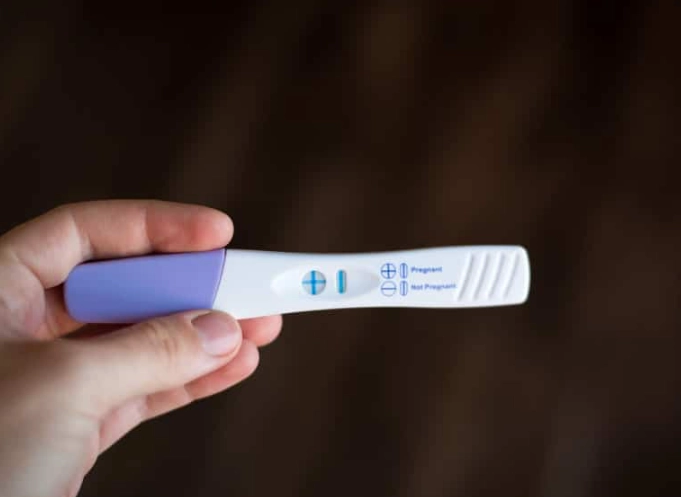
So, you can see why testing too early is pointless. If you test before implantation has even occurred, you're literally testing for a hormone that doesn't exist in your body yet. No wonder it's negative.
A Reality Check: Many "early detection" tests advertise they can be used 5-6 days before your missed period. While technically possible for some women with early implantation and high sensitivity, it gives a lot of false negatives. It sets you up for disappointment. I learned this the hard way with a negative test at 10 days past ovulation, only to get a clear positive two days later. That early test just caused two days of unnecessary sadness.
So, with that crucial timing context, let's compare the actual methods side-by-side.
Head-to-Head: The Contenders for Quickest Pregnancy Test
This table lays it all out. Think of it as your cheat sheet in the quest to find the quickest way to tell if you're pregnant.
| Method | How Soon It Can Detect (After Ovulation) | How Soon (Before Missed Period) | Key Advantage (The "Quick" Factor) | The Big Catch / Disadvantage |
|---|---|---|---|---|
| High-Sensitivity Home Pregnancy Test (HPT) | Around 8-10 days (if implantation is early) | Up to 5-6 days before (with major caveats) | Immediate, private, cheap, and can be the absolute fastest if you hit the timing right. | High chance of false negative if taken too early. Results depend on urine concentration. User error is possible. |
| Standard Home Pregnancy Test | 10-12 days | On or after the day of your missed period | Extremely accurate when used correctly at the right time. Widely available. | Not the fastest. Requires waiting longer for definitive result. |
| Qualitative Blood Test (hCG blood test at clinic) | 6-8 days | Up to a week before | Can detect pregnancy earlier than ANY urine test. Done by a pro, so no user error. | Requires a doctor's visit or lab order. Not instant—takes hours or a day for results. More expensive and invasive. |
| Quantitative Blood Test (Beta hCG) | 6-8 days | Up to a week before | Not only detects hCG but measures the exact amount. Can track the rise to confirm a viable pregnancy later. | All the cons of the qualitative test, plus it's usually more expensive and even less convenient. |
Looking at the table, a clear picture forms. If your definition of "what's the quickest way to tell if I'm pregnant?" is purely about the earliest possible biological detection, the blood test wins. But if your definition balances speed with instant results, privacy, and cost, then a high-sensitivity home test used strategically is the practical winner for most people.
My Personal Strategy: After that early negative experience, I found a better approach. I'd use a cheap, sensitive strip test (I found one that could detect hCG levels as low as 10 mIU/mL) starting at maybe 10 days past ovulation. I'd use first-morning urine. If it was negative, I wouldn't panic. I'd wait two full days and test again. The two-day wait is key because that's roughly the doubling time for hCG in early pregnancy. A negative turning positive is a clear answer. This saved me money and sanity.
Decoding "Early Symptoms" – Your Body's Whisper (Or Just PMS?)
Before you even pee on a stick, you might be hyper-aware of every twinge. Can symptoms tell you what's the quickest way to tell if you're pregnant? Not reliably, I'm afraid.
Many early pregnancy symptoms—tender breasts, fatigue, mood swings, light cramping—are virtually identical to premenstrual syndrome (PMS) symptoms. They're caused by the hormone progesterone, which is high in both the late luteal phase (before your period) and in early pregnancy.
That said, there are a couple of signs that are slightly more suggestive of pregnancy than PMS, though still not proof:
- Implantation Bleeding/Cramping: A small amount of spotting or light cramping around the time your period is due (but a week or so after ovulation). It's often lighter and shorter than a period. But many women don't experience this at all, and some spotting can also happen before a period.
- A Notable Shift in Basal Body Temperature (BBT): If you're tracking your BBT, your temperature typically stays elevated after ovulation and drops right before your period. If it stays elevated for more than 16-18 days post-ovulation, that's a strong clue. But this requires diligent tracking beforehand.
- A Sudden, Profound Aversion or Craving: Sometimes it's specific and intense, not just "I want chips." More like "The smell of coffee I've loved for years suddenly makes me gag." This is usually a bit later, though.
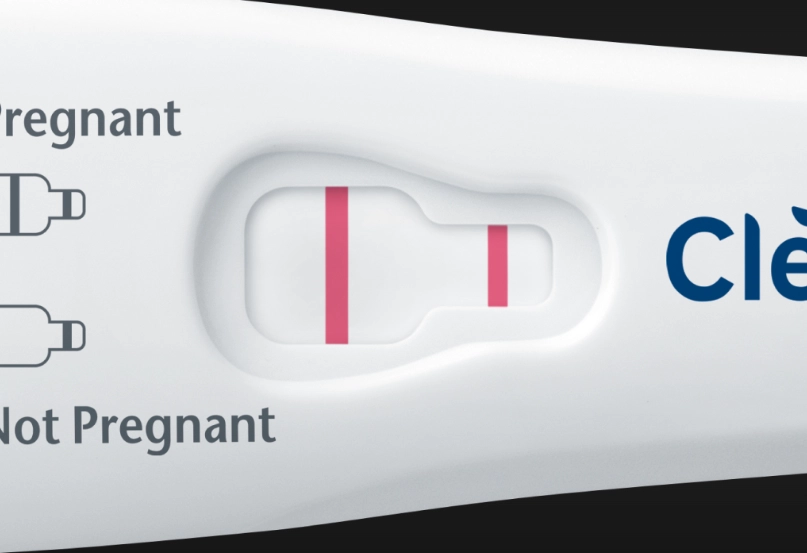
Relying on symptoms alone is a rollercoaster. One day you're convinced you're pregnant because you're tired, the next day you're convinced you're not because you feel fine.
The bottom line? Symptoms can prompt you to take a test, but they shouldn't be the test itself. For every woman who "just knew," there's another who had zero symptoms and was pregnant, or had all the symptoms and got her period. It's maddening, but it's biology.
Executing the Plan: How to Actually Get Your Answer
If You Want the Absolute Earliest Possible Answer (The Blood Test Route)
Call your doctor, OB-GYN, or a local clinic like Planned Parenthood. Explain you'd like a qualitative hCG blood test to check for early pregnancy. They can advise if it's appropriate and order it for you. You'll go to a lab, get your blood drawn, and wait for the results. This is the definitive answer to what's the quickest way to tell if I'm pregnant from a detection-sensitivity standpoint. The American College of Obstetricians and Gynecologists (ACOG) notes that blood tests are quantitative and can provide crucial information about the pregnancy's progression, which is another benefit if you need follow-up care.
If You Want the Fastest At-Home Answer (The Smart HPT Strategy)
This is where you can optimize. Don't just grab any test.
- Choose a Sensitive Test: Look at the box. It will say something like "Detects hCG at 25 mIU/mL" or "10 mIU/mL." The lower the number, the more sensitive, and the earlier it can work. Some well-known early detection brands include First Response Early Result (FRER) and certain generic equivalents. You can often find the sensitivity info in the fine print online if not on the box.
- Use First-Morning Urine: Especially for early testing. Your urine is most concentrated after sleeping, meaning hCG (if present) is most concentrated. This gives you the best shot.
- Time It Based on Ovulation, Not Your Period: If you know when you ovulated (using OPKs, BBT, etc.), 10-12 days past ovulation (DPO) is a reasonable first test day. If you only know your period due date, testing on the day it's due is your best bet for accuracy. Testing 5-6 days before is gambling.
- Read the Instructions. Seriously. Set a timer. Don't peek early. Don't read the result after the time window (usually 5-10 minutes), as evaporation lines can appear and cause panic.
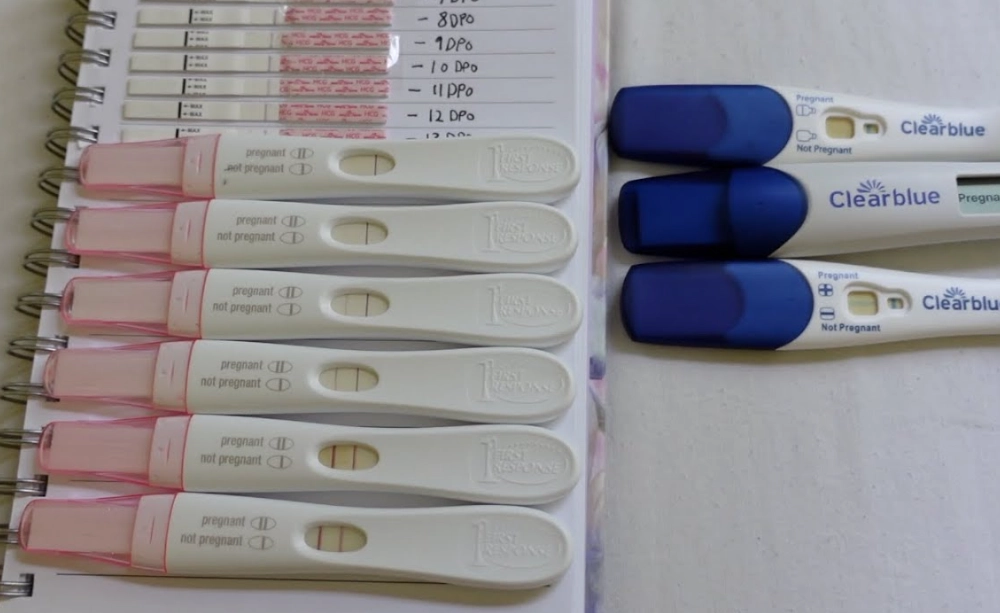
What if the line is faint? A faint line is still a line. It means hCG is present, just in low amounts. This is especially true on a sensitive test. A common saying in trying-to-conceive communities is "A line is a line." Confirm with another test in 48 hours—it should be darker.
Navigating the Murky Waters: False Results & Next Steps
Understanding the pitfalls is part of finding the quickest reliable way.
False Negatives (The heartbreaker)
This is by far the most common. You're pregnant, but the test says no. Why?
- You Tested Too Early: The #1 reason. You tested before implantation or before hCG rose to a detectable level for your test.
- Diluted Urine: You drank a lot of water before testing, diluting the hCG concentration.
- Faulty Test or User Error: It happens. The test was expired, or you didn't follow instructions.
What to do? If your period is late and you got a negative, wait 3-7 days and test again with first-morning urine. If still negative and no period, contact your doctor.
False Positives (The mind-bender)
Rarer, but devastating in a different way. A test says pregnant, but you're not. Possible causes:
- Chemical Pregnancy: A very early miscarriage that happens shortly after implantation. There was enough hCG to trigger a test, but the pregnancy didn't progress. This is surprisingly common and often goes unnoticed without early testing.
- Certain Medications: Some fertility drugs containing hCG (like Pregnyl) can cause a positive. Other medications like antipsychotics or anticonvulsants rarely interfere.
- Evaporation Line: You read the test after the instructed time, and a faint, colorless line appears where the positive line would be. It's a trick of evaporation, not a positive.
- Medical Conditions: Very rarely, conditions like ovarian tumors can produce hCG.
What to do? A false positive on a home test is unusual. Confirm with a different brand of test, or better yet, get a blood test from your doctor for a definitive answer. The U.S. Food and Drug Administration (FDA) provides consumer information on the use and accuracy of home pregnancy tests, which is a good resource if you're concerned about test reliability.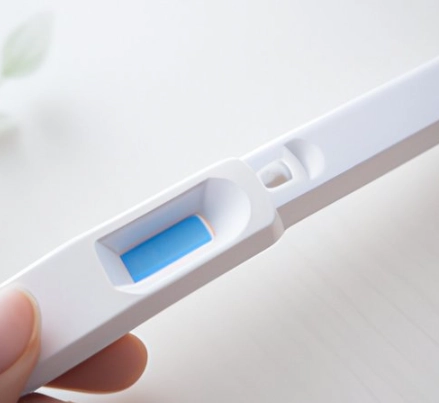
Your Questions, Answered (The Stuff You're Really Searching For)
Here are the real-world questions that pop up when you're down the rabbit hole of searching for the quickest way to tell if you're pregnant.
Wait a week and test again. If still negative and no period, it's time to see a doctor. Your period could be late for many reasons unrelated to pregnancy: stress, illness, significant weight change, thyroid issues, or polycystic ovary syndrome (PCOS).
Often, yes. Digital tests have to have enough hCG to trigger a clear "Pregnant" or "Not Pregnant" reading. The mechanism inside that creates the words may require a slightly higher hCG threshold than a simple line test that can show a faint line. For the earliest possible result, a manual line test is usually better.
Most common medications (birth control, antibiotics, pain relievers) do NOT affect pregnancy tests. As mentioned, the big exception is fertility drugs containing hCG. Medical conditions that affect hCG are rare. If you're unsure, the Centers for Disease Control and Prevention (CDC) website, while focused on broader reproductive health, underscores the importance of accurate testing and clinical consultation for family planning.
This is a hot debate in online forums. Many women (myself included) prefer pink dye tests (like First Response). They tend to have fewer instances of confusing "evaporation lines" or blue dye runs that can look like a faint positive. Blue dye tests can be more prone to these ambiguous results, causing more anxiety.
This is the toughest scenario. The concept of "before your missed period" is meaningless. Your best bet is to track ovulation using ovulation predictor kits (OPKs) or other methods. Test about 12-14 days after you get a positive ovulation test. If you don't track ovulation, you'll have to test periodically based on when you had unprotected sex—about 2-3 weeks after the encounter is a reasonable time for a reliable result.
The Final Verdict: So, what's the quickest way to tell if you're pregnant? For raw, earliest detection, it's a qualitative blood test at a clinic. For the best blend of speed, convenience, and instant results, it's a high-sensitivity home pregnancy test used with first-morning urine, starting no earlier than 10 days after ovulation (or on the day of your expected period). The secret isn't a magic test; it's patience and strategic timing.
The wait is brutal. I get it. You analyze every cramp, every mood swing. You stare at the test strip until you see phantom lines. But arming yourself with the facts—how the tests work, why timing matters, what the results really mean—takes some of the power away from the anxiety. It turns a frantic search into a planned mission. You can do this. Breathe. And when in doubt, a conversation with a healthcare provider is always the most reliable step of all.
Reader Comments