? Quick Navigation
Let's be honest, the first time you hear "you're four weeks pregnant" when you're pretty sure conception happened just two weeks ago, your brain does a little flip. It feels like a weird math trick, right? You're not alone. This is probably the single most confusing thing about early pregnancy, and it trips up almost everyone. I remember staring at my first ultrasound report, completely baffled. The doctor said one thing, my app said another, and my own calculations were a third number entirely. It was frustrating.
So, let's cut through the noise. The short, direct answer to "Is 2 weeks pregnant actually 4?" is... usually, yes. In the medical world, when a doctor says you are 4 weeks pregnant, it often means about 2 weeks have passed since the sperm met the egg. The other two weeks are a sort of "pre-pregnancy" countdown. Sounds odd? It is. But there's a method to this madness, and once you get it, everything about your due date and those weekly updates starts to make a lot more sense.
Why Doctors Start Counting Before You're Even Pregnant
This is the core of the confusion. Obstetricians and midwives don't start the pregnancy clock on the day of conception. They start it on the first day of your last menstrual period (LMP). This method is called gestational age. It's a standard used worldwide, recommended by major health bodies like the American College of Obstetricians and Gynecologists (ACOG).
Think about it from a doctor's perspective. For most people, the date of their last period is a solid, known data point. You can mark it on a calendar. The exact moment of conception? That's almost always a mystery. Even if you know the day you had sex, sperm can live inside the body for up to 5 days, waiting for an egg. And ovulation itself can shift. So, the LMP is simply a more reliable and consistent starting line for the medical team.
Your cycle is basically divided into two phases: the follicular phase (before ovulation) and the luteal phase (after ovulation). The LMP dating system assumes a "textbook" 28-day cycle where ovulation happens right on day 14. In this model, weeks 1 and 2 of your pregnancy are actually the weeks you are menstruating and then preparing an egg for release. You aren't pregnant yet. Conception happens around the start of week 3. So, by the time a pregnancy test might first show positive (around when your period is due), you're already considered about 4 weeks pregnant.
The Two Clocks: Gestational Age vs. Fetal Age
This is the key distinction that clears up about 90% of the headache.
- Gestational Age (GA): This is the "doctor's clock." It's measured from the first day of your Last Menstrual Period (LMP). This is the number used on all your medical charts, ultrasound reports, and when people ask "how far along are you?"
- Fetal Age (or Conceptual Age): This is the "biological clock." It's measured from the estimated date of conception. This number is always about two weeks behind the Gestational Age.
Most of the time, when you're wondering, "Is 2 weeks pregnant actually 4?" you're comparing Fetal Age (2 weeks) to Gestational Age (4 weeks). They're both describing the same point in time, just using different starting points.
Quick Reference: Pregnancy Week Conversion
If you're trying to translate between what you feel (time since conception) and what your doctor says, this rough guide helps:
- You think you conceived 1 week ago → Doctor says you're ~3 weeks pregnant.
- You think you conceived 2 weeks ago → Doctor says you're ~4 weeks pregnant (There's that question again: is 2 weeks pregnant actually 4? Yes, in this context).
- You think you conceived 4 weeks ago → Doctor says you're ~6 weeks pregnant.
- Positive pregnancy test (missed period) → Doctor says you're ~4 weeks pregnant.
What This Looks Like in a Real Pregnancy Timeline
Let's walk through a typical scenario with a table. This visual often makes it click for people.
| Gestational Age (Doctor's Timeline) | What's Actually Happening Biologically | Common Milestones & Notes |
|---|---|---|
| Week 1 | Your period is happening. The body sheds the uterine lining from the previous cycle. No pregnancy exists. | This is the official "start" of pregnancy, even though you're not pregnant. |
| Week 2 | Your body prepares for ovulation. An egg matures in its follicle. | Still not pregnant. This is the pre-game. |
| Week 3 | Ovulation & Conception. The egg is released and fertilized by sperm. This is the moment of conception. | Fetal Age begins here (Week 1 of fetal life). The fertilized egg travels to the uterus. |
| Week 4 | Implantation! The tiny blastocyst burrows into the uterine lining. The body starts producing hCG. | A very sensitive test might show a faint positive at the very end of this week. This is often when someone feels "2 weeks pregnant" but is dated at 4. |
| Week 5 | hCG levels rise rapidly. Early pregnancy structures begin to form. | Missed period. Most home tests will give a clear positive now. |
| Week 6 | The embryo's heart may start to flicker. Major organs begin forming. | Often the time of a first confirmation ultrasound. |
See the disconnect? When you get that positive test around the time of your missed period, medical science has already been counting you as pregnant for four weeks. It's a head-spinner, but the table shows the logic.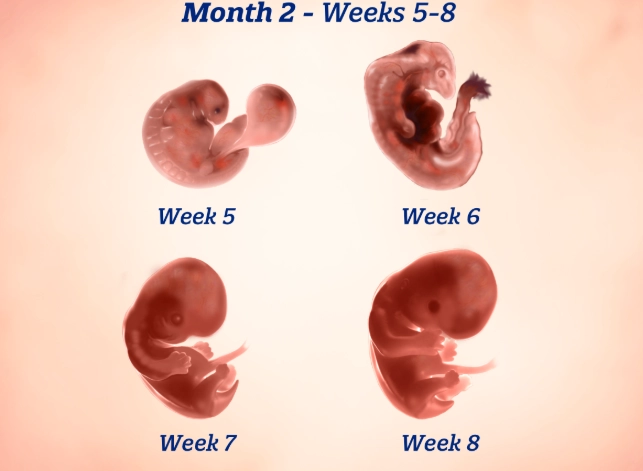
What If Your Cycle Isn't 28 Days?
Here's where the LMP method can get a bit wobbly, and why ultrasounds become so important. The standard calculation assumes a perfect 28-day cycle with ovulation on day 14. But who lives in a textbook?
- Longer Cycles (e.g., 35 days): If you ovulate later, say on day 21, then at the moment of your missed period (day 35), you've only *just* conceived. The LMP method would say you're 5 weeks pregnant, but your fetal age is barely 1 week. An early ultrasound will correct this.
- Shorter Cycles (e.g., 21 days): If you ovulate early, on day 7, you could be further along in fetal development than the LMP date suggests when you miss your period.
- Irregular Cycles: If you have no idea when your last period was, the LMP date is useless. An ultrasound is essential for dating.
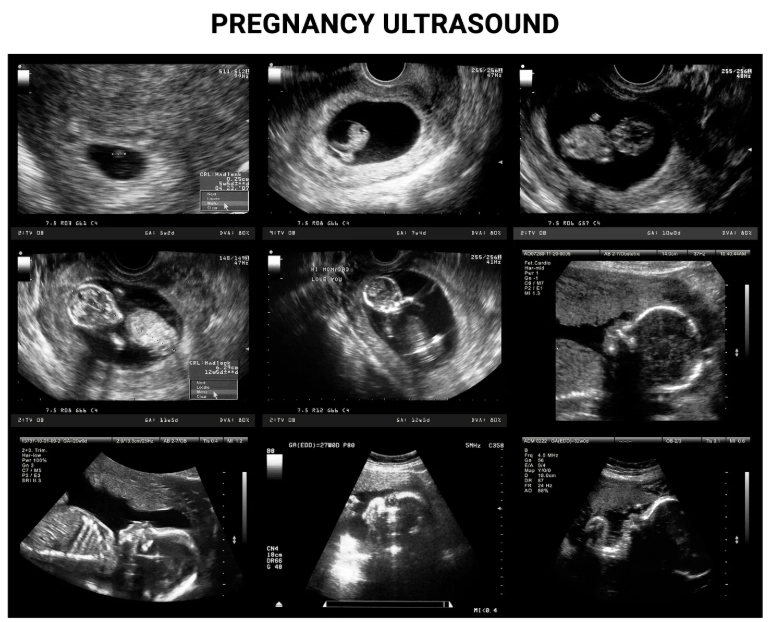
This is precisely why your first-trimester ultrasound (often called a dating scan) is the gold standard. It measures the baby's size (Crown-Rump Length) to pinpoint the gestational age far more accurately than any calendar guess. The scan might adjust your due date, and that's completely normal. In fact, according to the Mayo Clinic, ultrasound dating in the first trimester is the most accurate method to establish or confirm a due date.
Answering Your Burning Questions (The FAQ Section)
Let's tackle the specific questions swirling in your head. I've heard these dozens of times from friends and in online communities.
I got a positive test. My app says I'm 4 weeks. I feel like it just happened. Am I wrong?
No, you're not wrong. You're just on different clocks. Your feeling of "it just happened" is referencing the biological event (conception). The app is using the standard medical gestational age, which started counting two weeks before that event. Both perspectives are valid in their own context.
Why don't doctors just use the conception date? It seems more accurate.
It seems that way, but for the vast majority of people, it's not. The LMP is a known, concrete date. The conception date is a guess (even with tracking). Medicine needs a standardized, reproducible method for everyone, regardless of how closely they track their cycle. The LMP method, with ultrasound backup, provides that consistency.
My ultrasound due date is different from my LMP due date. Which one is right?
Trust the ultrasound, especially if it was done in the first trimester (before 13 weeks). The early ultrasound measurement of the baby is a direct physical indicator of age, while the LMP date is a theoretical estimate based on a standard cycle. Your care provider will almost always use the ultrasound-calculated due date if there's a significant discrepancy (more than 5-7 days).
I have no idea when my last period was. How will I be dated?
This is super common, especially for those with irregular cycles or who weren't trying to conceive. Don't panic. Your healthcare provider will rely entirely on your first-trimester ultrasound to determine how far along you are and give you a due date. It's one of the main reasons that scan is so important.
Does the "Is 2 weeks pregnant actually 4?" confusion affect my symptoms?
It can, mentally. If you read that "at 6 weeks, morning sickness peaks," but your fetal age is only 4 weeks, you might worry if you're not feeling sick yet. Or you might feel symptoms earlier than the "book" says and think something's wrong. Always link symptoms to fetal development, not just the gestational week number. And of course, talk to your doctor about any concerns.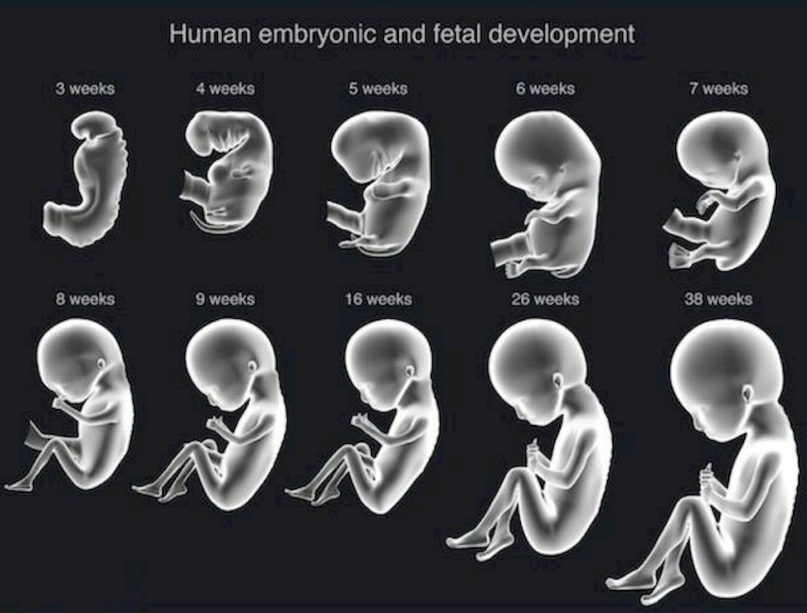
Practical Tips for Keeping It Straight
All this theory is great, but what do you actually *do*?
- Use a Reliable Calculator... Cautiously. When you input your LMP into a pregnancy calculator, remember it's spitting out gestational age. In your own mind, you might subtract two weeks to approximate the time since conception.
- Communicate Clearly with Your Provider. If you're tracking ovulation and think you know the conception date, tell them! Say, "My LMP was X, but I believe I ovulated/conceived around Y." This gives them a fuller picture.
- Embrace the Ultrasound Correction. If your dating scan moves your due date, see it as a good thing—a more accurate map for the journey ahead, not a "mistake." It's standard practice.
- Focus on the Milestones, Not Just the Weeks. Instead of obsessing over being "week 7," focus on what's happening: "The neural tube is closing," "The arm buds are forming." This connects you to the actual biology.
Look, the system isn't perfect. I personally think it sets people up for initial confusion and can make the very early weeks feel abstract. Why count time when you're not even pregnant? But after working in this field and going through it myself, I get the practical necessity. Having a single, universal starting point, even if it's a bit artificial, prevents chaos in clinical settings.
So, the next time you see a pregnancy announcement that says "6 weeks along," you'll know that little one's biological age is closer to 4 weeks of incredible, rapid development. And when you search "Is 2 weeks pregnant actually 4?" you can confidently say you've unraveled the mystery. It's not a trick; it's just two different ways of telling the same beautiful, complex story of a new life beginning.
The journey is long enough without this added confusion. Now that you understand the dual clocks, you can put this puzzle aside and focus on the amazing things happening, regardless of what number is on the calendar this week.
Reader Comments