You're in the home stretch. The third trimester brings rapid fetal growth, final organ development (hello, baby brain!), and significant physical changes for you. What you eat now directly fuels this final construction phase and prepares your body for labor and recovery. Forget just "eating for two" – it's about strategic, nutrient-dense eating for two specific goals: supporting your baby's last big growth spurt and managing your own energy and comfort.
What You'll Find in This Guide
The Core Nutrition Goals of Your Third Trimester
Your calorie needs increase, but not dramatically. The American College of Obstetricians and Gynecologists recommends an extra 450-500 calories per day in the third trimester. That's about a turkey sandwich and an apple, not a second full dinner.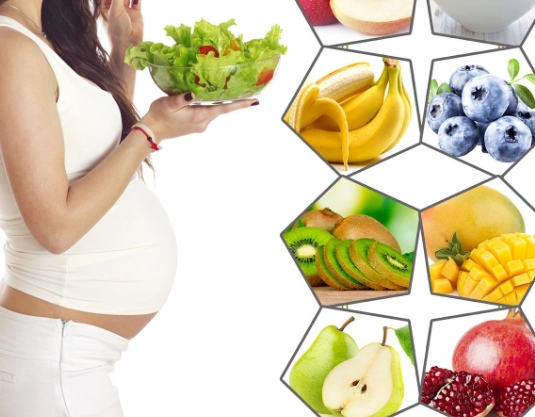
The real shift is in what those calories are made of. Here's where to focus:
Protein: The Building Block for Baby's Final Growth
Protein needs jump to about 70 grams daily. This isn't just for muscle; it's crucial for your baby's brain development and your own uterine and breast tissue growth. I see many women focusing on calcium but skimping on protein. Don't make that mistake.
Iron & Vitamin C: Preventing Fatigue and Supporting Blood Supply
Your blood volume has increased by almost 50%. Iron is essential to make hemoglobin and prevent anemia, which causes crushing fatigue. Pair iron-rich foods (lean red meat, lentils, spinach) with vitamin C (bell peppers, citrus, strawberries) to boost absorption dramatically.
Calcium & Vitamin D: For Baby's Bones (and Protecting Yours)
Your baby is drawing about 250mg of calcium per day from you to harden its skeleton. If you don't consume enough, your body will pull it from your bones. Aim for 1,000mg daily from food first.
DHA (Omega-3): The Brain and Eye Developer
This specific fat is integrated directly into your baby's developing brain and retina. The third trimester is a period of massive brain growth. Low maternal DHA is linked with suboptimal cognitive outcomes.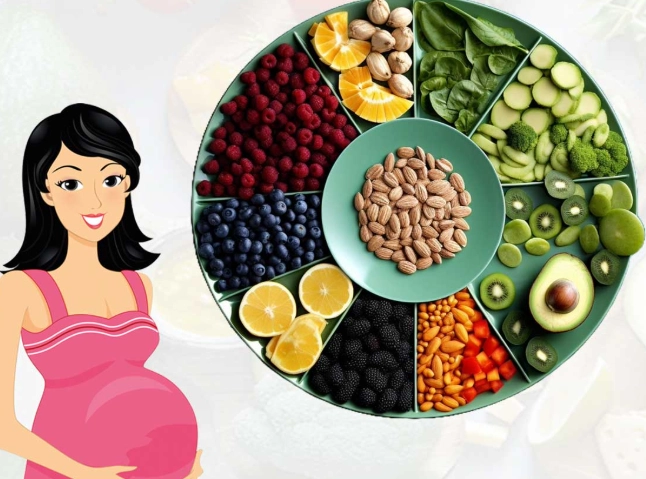
Magnesium & Potassium: The Unsung Heroes for Comfort
These minerals help with muscle function (think preventing those painful leg cramps), nerve signaling, and fluid balance. They're natural relaxants. I find many prenatal supplements are low in magnesium, making food sources critical.
Quick Takeaway: Think of your plate in quarters: one-quarter quality protein, one-quarter whole grains or starchy veg for energy, and half non-starchy vegetables and fruits for vitamins, minerals, and fiber. Add a side of healthy fat like avocado or olive oil.
Key Foods to Eat (Your Third Trimester Superfoods)
Let's get specific. This isn't an exhaustive list, but these are the power players I consistently recommend to my clients for maximum impact.
| Superfood | Why It's a Third Trimester Star | How to Eat It (Simple Ideas) | Target Serving (Daily/Weekly) |
|---|---|---|---|
| Greek Yogurt | Packed with protein (nearly 20g per cup) and calcium. Also contains probiotics, which can support gut health and immunity. | Plain with berries and nuts, in smoothies, as a base for savory dips. | 1 cup daily |
| Lentils & Beans | Excellent plant-based protein and iron sources. High in fiber to combat constipation and magnesium for muscle relaxation. | In soups, stews, salads, or as lentil pasta. | 1-2 cups cooked, 3-4 times/week |
| Salmon (Wild-caught) | One of the best sources of DHA. Also provides high-quality protein and vitamin D. | Baked, grilled, or in salmon burgers. Canned salmon is great for salads. | 2-3 servings (8-12oz) per week |
| Eggs (especially the yolk) | A complete protein. The yolk contains choline, critical for baby's brain development and often under-consumed. | Scrambled, hard-boiled, in omelets with veggies. | 1-2 eggs daily |
| Leafy Greens (Spinach, Kale) | Loaded with folate, iron, calcium, magnesium, and fiber. A true multivitamin in a leaf. | Sautéed with garlic, blended into smoothies (you won't taste kale!), in salads. | 2+ cups raw or 1 cup cooked daily |
| Avocado | Rich in healthy monounsaturated fats (for baby's brain), potassium (to combat swelling), and fiber. | On toast, in salads, as guacamole, blended into smoothies for creaminess. | 1/2 to 1 avocado daily |
| Sweet Potatoes | A fantastic source of beta-carotene (converts to vitamin A), potassium, and complex carbs for sustained energy. | Baked, roasted as fries, mashed. | 1 medium, a few times/week |
Foods to Be Cautious With or Avoid
This isn't about fear, but about informed choice to minimize risk.
High-Mercury Fish: Shark, swordfish, king mackerel, tilefish, and bigeye tuna. Mercury can harm a developing nervous system. Stick to low-mercury options like salmon, shrimp, pollock, sardines, and light canned tuna (limit to one 6oz can per week).
Raw or Undercooked Foods: Sushi (unless made with cooked fish), rare steak, raw cookie dough, runny eggs. The risk is foodborne illness like listeria or salmonella, which can be severe in pregnancy.
Unpasteurized (Raw) Dairy and Juices: Skip raw milk, certain soft cheeses like brie or feta unless labeled "made with pasteurized milk." Listeria can lurk here.
Excess Caffeine: The current guideline is under 200mg per day. That's about one 12-ounce cup of coffee. Remember, caffeine is also in tea, soda, and chocolate.
Ultra-Processed "Junk" Foods: These are empty calories that displace nutrient-dense foods. They often cause energy spikes and crashes, worsen heartburn, and contribute to excessive weight gain. An occasional treat is fine, but they shouldn't be staples.
Managing Common Discomforts Through Diet
How you eat can be as important as what you eat in managing third trimester woes.
For Heartburn and Acid Reflux
That burning sensation is brutal. Eat smaller, more frequent meals. Avoid large meals before lying down. Identify and limit your personal triggers (common ones: spicy foods, citrus, tomatoes, chocolate, fried foods, carbonated drinks). Try sipping on almond milk or having a tablespoon of plain yogurt.
For Constipation
Fiber is your best friend, but you must pair it with water. Aim for 25-35 grams of fiber daily from vegetables, fruits, whole grains (oats, quinoa), and legumes. Prunes or prune juice are a natural remedy. A tablespoon of ground flaxseed or chia seeds in your yogurt works wonders. Hydration is non-negotiable – if you increase fiber without water, you'll make things worse.
For Swelling (Edema)
Some swelling is normal due to increased blood volume and pressure from the uterus. To help manage it, ensure adequate protein intake (it helps hold fluid in blood vessels), focus on potassium-rich foods (bananas, spinach, potatoes, yogurt), and drink plenty of water. It seems counterintuitive, but dehydration makes your body hold onto fluid. Limit very high-sodium processed foods (chips, canned soups, fast food).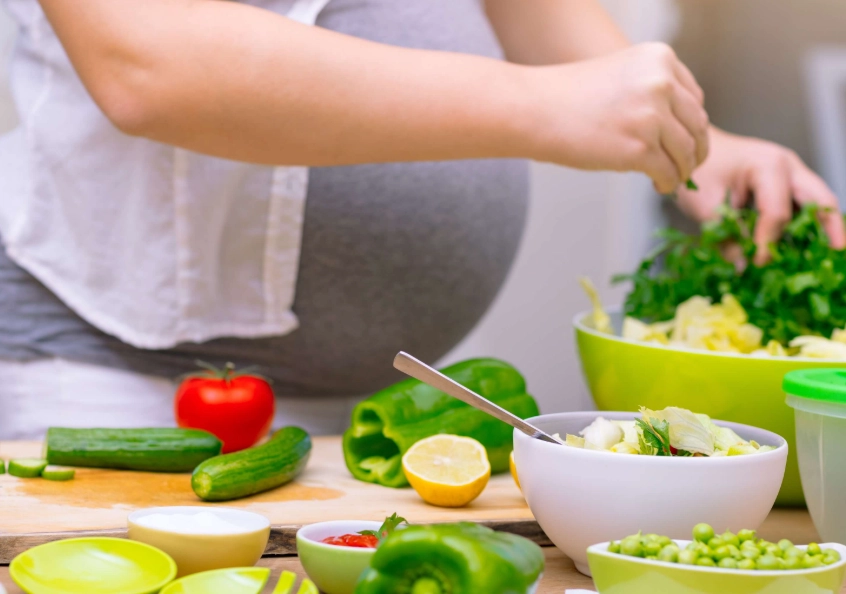
Putting It All Together: Simple Daily Meal Ideas
Don't overcomplicate it. Here’s a flexible, nutrient-packed day of eating.
Breakfast: Two-egg omelet with spinach and mushrooms, cooked in olive oil. One slice of whole-grain toast with 1/4 avocado. A small orange.
Morning Snack: A cup of plain Greek yogurt with a handful of blueberries and a sprinkle of walnuts.
Lunch: Large salad with mixed greens, grilled chicken breast (leftovers are perfect), chickpeas, cherry tomatoes, cucumber, and a lemon-tahini dressing. A whole-grain roll on the side.
Afternoon Snack: Apple slices with a tablespoon of almond butter. A big glass of water.
Dinner: Baked wild salmon fillet with a lemon-dill sauce. A side of quinoa. A large portion of roasted broccoli and carrots drizzled with olive oil.
Evening Snack (if hungry): A small bowl of magnesium-rich foods like a few squares of dark chocolate (70%+) and a handful of pumpkin seeds, or a cup of herbal tea (like raspberry leaf, but check with your provider first).
See the pattern? Protein, healthy fat, fiber, and color at every meal. Hydrate consistently throughout the day with water – don't try to chug it all at once.
Your Third Trimester Diet Questions Answered
Do I really need to eat a lot more in the third trimester?
Not "a lot" more. The American College of Obstetricians and Gynecologists (ACOG) recommends an extra 450-500 calories per day in the third trimester. That's roughly equivalent to a substantial snack or a small meal, like a turkey sandwich and an apple. The focus should be on nutrient density, not volume. Overeating can increase discomfort and isn't necessary for healthy fetal growth.
What are the best foods to reduce swelling (edema) in the third trimester?
Focus on potassium-rich foods (bananas, spinach, sweet potatoes, yogurt) to help balance sodium, and magnesium-rich foods (avocados, nuts, legumes) to support circulation. The real game-changer is consistently drinking enough water (aim for 10 cups daily) to help your kidneys flush excess fluid. Contrary to instinct, restricting fluids makes swelling worse.
Is it safe to eat spicy food in the third trimester if I have heartburn?
It's a major trigger for most. The relaxed valve (LES) between your stomach and esophagus can't handle capsaicin well. If you crave spice, have a tiny amount early in the day with a meal, never on an empty stomach. Better alternatives for flavor are fresh herbs, ginger, or cumin, which are less likely to cause reflux.
Should I take a protein powder supplement in my third trimester?
Generally, no. You can and should meet your increased protein needs (about 70g/day) through whole foods like Greek yogurt, eggs, chicken, lentils, and fish. Whole foods provide a complex matrix of other nutrients that isolated powders lack. If you're struggling severely (e.g., food aversions), consult your doctor or a dietitian before adding a supplement, and choose a clean, third-party tested product.
Remember, this guide is a framework. Your body is unique. Always discuss major dietary changes with your healthcare provider or a registered dietitian specializing in prenatal nutrition. Listen to your hunger and fullness cues, and give yourself grace. You're growing a human – that's incredible work. Fueling that process with intention in these final weeks is one of the most powerful things you can do for both of you.
Reader Comments