Quick Navigation
- Breaking Down the Basics: What Do C and T Actually Stand For?
- The Visual Guide: What Your Test Result Actually Means
- That Faint T Line: Is It a Real Positive or Just a Trick?
- When Tests Go Rogue: Understanding False Positives and False Negatives
- Beyond the Lines: What To Do After Your Result
- Your Top Questions, Answered (FAQ)
- A Few Parting Thoughts from Experience
Let's be honest, staring at a little plastic stick waiting for lines to appear is one of the most nerve-wracking moments ever. Your heart is pounding, your mind is racing, and then... you see something. But what does it mean? Is C or T positive for pregnancy? That's the million-dollar question, and if you're searching for that exact phrase, you're not alone. I remember helping my best friend through this; she was so confused she almost threw the test away thinking it was broken. It's not as intuitive as they make it seem in the movies.
This guide is here to cut through the confusion. We're going to break down exactly what the C and T lines mean, how to read every possible result (even the fuzzy ones), and what you should do next. No medical jargon, just plain talk.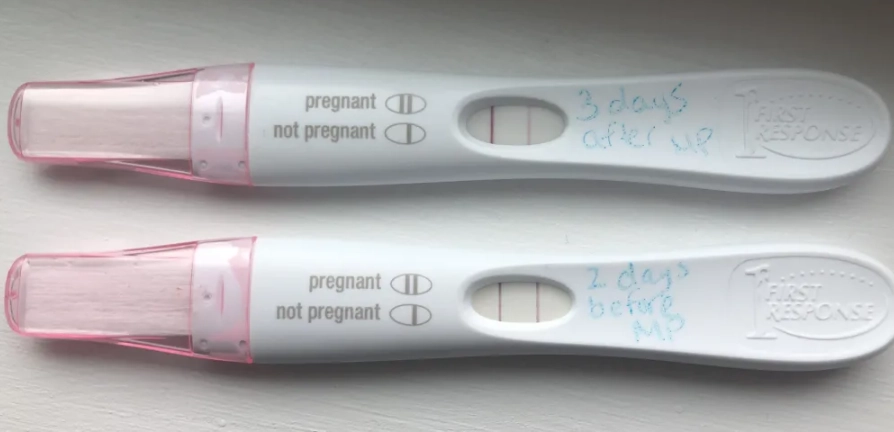
Breaking Down the Basics: What Do C and T Actually Stand For?
Every pregnancy test has a built-in control mechanism. It's like a quality check. The test needs to prove to you that it worked before it can tell you anything about pregnancy.
The Control Line (C): The Test's "I'm Working" Signal
The C line has to appear for the test result to be considered valid. It doesn't matter if you're pregnant or not—this line should show up if you used the test correctly and it's not defective. It's usually a bit thicker or darker than the potential T line, at least initially. If the C line doesn't show up, the test is invalid. It's a dud. Grab another one.
The Test Line (T): The Pregnancy Indicator
This is the line that reacts to the pregnancy hormone hCG (human chorionic gonadotropin) in your urine. No hCG? No T line (assuming the test is working, which the C line confirms). Detectable levels of hCG? The T line starts to appear. The strength of the line can vary based on how much hCG is present, which often correlates with how far along you might be. But here's the crucial bit: any distinct line in the T area, even a faint one, is usually considered a positive result if the C line is also present.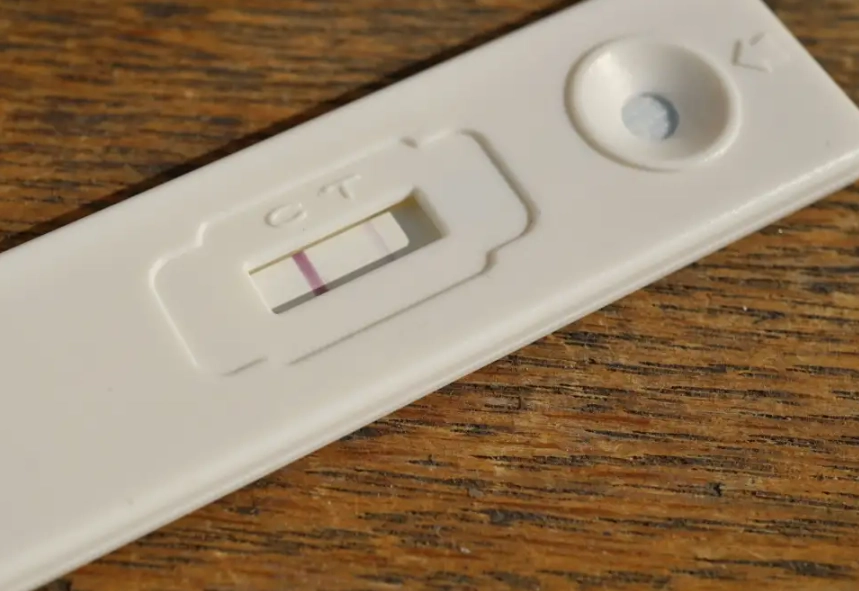
So, when people ask "Is C or T positive for pregnancy?", they're really asking which line is the *indicator* of pregnancy. And that's the T line.
The Visual Guide: What Your Test Result Actually Means
Reading a test isn't always yes or no. Sometimes it's a "maybe," a "huh?", or a "I need a second opinion." Let's look at the common scenarios.
| What You See | Official Result | What It Most Likely Means | Your Next Step |
|---|---|---|---|
| One line only in the C window. T window is completely blank. | Negative | The test detected little to no hCG hormone. You are likely not pregnant, or it is too early to detect pregnancy. | If your period is late, test again in 3-5 days with first-morning urine. |
| Two clear lines. One in C, one in T. The T line can be faint or dark. | Positive | The test detected hCG. This is a positive pregnancy test. A faint T line often means early pregnancy (lower hCG levels). | Schedule an appointment with your healthcare provider for confirmation and next steps. |
| One line only in the T window. C window is blank. | Invalid | The test did not work. The control mechanism failed. This result should not be trusted. | Discard and use a new test. Check the expiry date first. |
| No lines at all. Both windows are blank. | Invalid | The test did not work. Likely not enough urine, or a faulty test. | Use a new test, ensuring you follow the instructions for time and urine volume. |
| A very faint, colorless, grey-ish mark in the T window after a long time (hours). | Likely Negative / Evaporation Line | This is probably an "evap line"—a mark left by urine drying, not a positive reaction. Tests should be read within the time window (usually 3-5 minutes). | Ignore results read outside the instructed time frame. Test again if unsure. |
See, it's that second row that answers the core question. Two lines mean positive. The T line is the one that delivers the news. Understanding this is key to avoiding panic over a faint line or confusion over which line is which.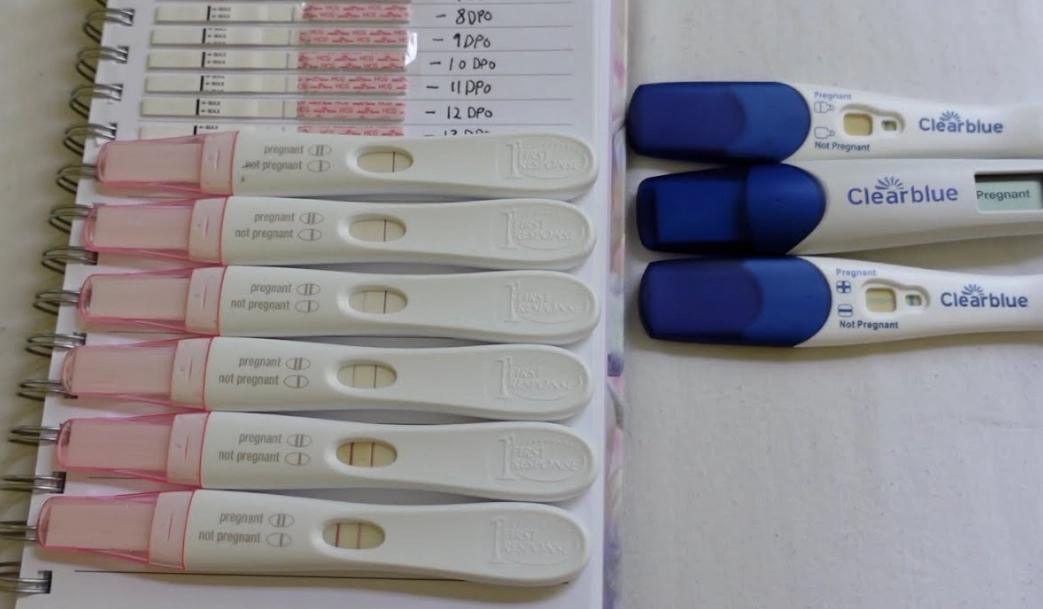
That Faint T Line: Is It a Real Positive or Just a Trick?
This causes more anxiety than anything else. You get a faint T line. Is it a yes? Is it your eyes playing tricks? Is it an evap line? I've been there, squinting in the bathroom light.
A true faint positive T line usually has color—it might be light pink, light blue, or light grey depending on the test brand, but it has pigment. It appears within the official reading time (check your leaflet, it's often 3-5 minutes). An evaporation line is typically colorless, grey, and appears after the reading window has passed, sometimes much later.
Why is the T line faint? If it's a true positive, it's almost always because your hCG levels are still low. This is super common if you're testing early, even just a day or two after your missed period. The hormone concentration doubles roughly every 48 hours in early pregnancy, so a test taken two days later could show a much darker line.
So, if you see a faint but colored line in the T spot within the reading time, and the C line is there, you should treat it as a positive. It's answering that "Is C or T positive for pregnancy?" question with a tentative "yes." Confirm with another test in 48 hours—it should be darker.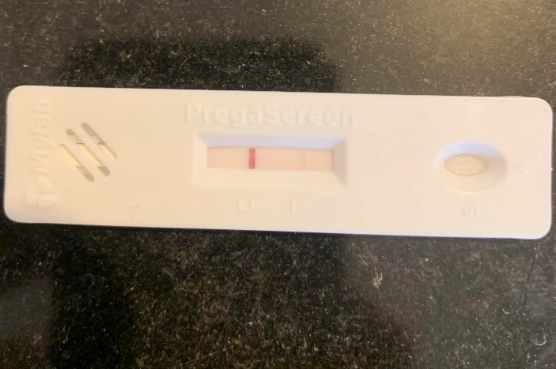
When Tests Go Rogue: Understanding False Positives and False Negatives
No test is perfect. Knowing the limitations helps you interpret your results smarter.
Can You Get a False Positive?
Yes, but it's less common than false negatives. A false positive is when you see a T line (positive) but are not pregnant. Causes can include:
- Chemical Pregnancy: This is an early pregnancy loss that happens shortly after implantation. The test correctly detected hCG, but the pregnancy did not progress. It's more common than people realize.
- Certain Medications: Fertility drugs containing hCG (like some shots used in IVF) can cause a true positive. Other medications like antipsychotics or anticonvulsants are rarely implicated but check with your doctor.
- Medical Conditions: Rarely, conditions like ovarian cysts, certain cancers, or kidney disease that affect hormone levels.
- Defective or Expired Test: Always check the expiry date.
Can You Get a False Negative?
This is way more common. A false negative is when you are pregnant but the test shows negative (only the C line). The biggest reason? Testing too early. If you test before the embryo has implanted and produced enough hCG for the test to detect, you'll get a negative. Other reasons:
- Using diluted urine (not your first-morning urine, which is most concentrated).
- Not waiting long enough before reading the test.
- Reading the test after the designated time (the dye may have moved, but that's not a positive).
The U.S. Food and Drug Administration (FDA) provides consumer information on the safe and effective use of home use tests, including pregnancy tests, which underscores the importance of following instructions to avoid errors. You can find more on their Home Use Tests page.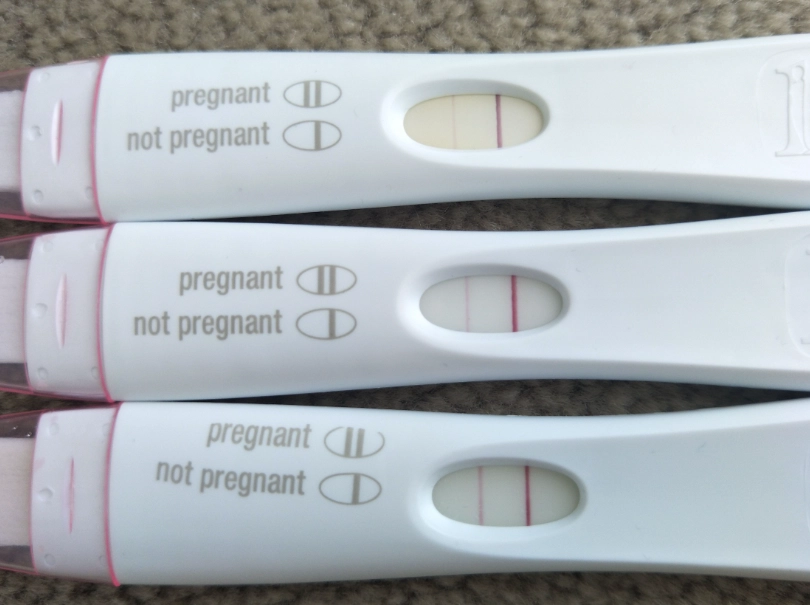
Beyond the Lines: What To Do After Your Result
Okay, you've answered "Is C or T positive for pregnancy?" for yourself. Now what?
If Your Test is Positive (Two Lines)
- Don't Panic (Easier said than done, I know). Take a breath. The result is what it is.
- Confirm with a Second Test. Use a different brand or test again in 48 hours. Seeing the T line get darker is reassuring.
- Call Your Doctor or Midwife. This is the most important step. They will confirm the pregnancy with a blood test (which measures the exact amount of hCG) and a clinical exam. They will also calculate your due date and start you on prenatal care. The Centers for Disease Control and Prevention (CDC) has resources on the importance of prenatal care for a healthy pregnancy.
- Start (or continue) taking a prenatal vitamin with folic acid, which is crucial for early fetal development.
If Your Test is Negative (Only the C Line)
- Consider the timing. Did you test too early? If your period is late, test again in a few days.
- Look at your cycle. Stress, illness, changes in weight or exercise, and hormonal fluctuations can all delay a period without pregnancy.
- If your period is significantly late and you continue to get negative tests, see your healthcare provider. They can check for other causes of a missed period.
Let's pause for a second. The whole process of testing and waiting can be incredibly stressful. It's okay to feel whatever you're feeling—excited, scared, overwhelmed, or disappointed. The test is just a tool. The lines, whether it's C or T positive for pregnancy, give you information to act on, not a final destiny.
Your Top Questions, Answered (FAQ)
How early can I test and actually trust the T line?
Most tests advertise "early detection," able to detect pregnancy up to 5-6 days before your missed period. But here's the real talk: the accuracy is much higher on or after the day of your expected period. Testing super early increases the chance of a false negative because your hCG might not be high enough yet. If you can't wait, test, but be prepared to test again later if you get a negative and your period doesn't show.
Do digital tests have C and T lines?
No, and that's why some people prefer them! Digital tests have a strip inside that reads the C and T lines for you and displays a clear "Pregnant" or "Not Pregnant" on a screen. They remove the squinting and guesswork. However, they work on the same principle—detecting hCG at the T zone.
Can an ectopic pregnancy cause a positive T line?
Yes, it can. An ectopic pregnancy (where the embryo implants outside the uterus, usually in a fallopian tube) still produces hCG. So, you would get a positive test (a T line). However, the hCG levels often rise more slowly. If you have a positive test accompanied by severe one-sided abdominal pain, shoulder pain, dizziness, or vaginal bleeding, seek medical attention immediately. The American College of Obstetricians and Gynecologists (ACOG) provides detailed information on the signs and risks of ectopic pregnancy.
What if the T line is a different color?
It shouldn't be. A blue-dye test T line should be blue. A pink-dye test T line should be pink/red. A weird color (like green or yellow) is a sign of a faulty test or possibly contamination. Trust the color the test is designed to show.
I still don't know if C or T is positive for pregnancy on MY test!
This is the most basic yet crucial step: Read the instructions that came in the box. I know, nobody wants to read the manual. But for 3 minutes of your time, you'll know for sure. The leaflet will have a diagram clearly labeling the C (Control) and T (Test) windows or areas. Some brands use symbols or different letters. The instructions are your ultimate guide for your specific test.
A Few Parting Thoughts from Experience
After going through this with friends and family, and from all the research, the biggest takeaway is to be kind to yourself during this waiting game. The question "Is C or T positive for pregnancy?" carries so much weight. It's a pivot point.
Home pregnancy tests are amazing tools for privacy and early knowledge, but they are just the first step. They are not a replacement for professional medical care. A faint T line that makes you wonder, a clear positive that changes everything, or a stubborn single C line that brings a mix of relief or confusion—they all lead to the same next step: talking to a doctor.
They can confirm what the test hints at, answer your deeper questions, and guide you forward, no matter what the path looks like. So use the test for what it is—an initial indicator. Then, take that information and seek the support and confirmation that really matters.
Reader Comments