If you're 39 weeks pregnant and feeling contractions just on one side—say, only on your left or right abdomen—you're not alone. I've talked to dozens of moms who panicked over this. Let's cut to the chase: it's often harmless, but sometimes it's a red flag. Your baby's position, your uterus's quirks, or early labor could be at play. Don't rely on Dr. Google; here's a straight-from-experience guide.
Here's What We'll Cover
What One-Sided Contractions Actually Feel Like
Picture a tightening or cramping that sticks to one spot—like a band squeezing just your right lower belly, not spreading across. It might come and go, or linger as a dull ache. Some women describe it as a stitch from running, but deeper. At 39 weeks, your uterus is huge, so asymmetry isn't rare. The baby might be curled on one side, pressing against nerves or muscles.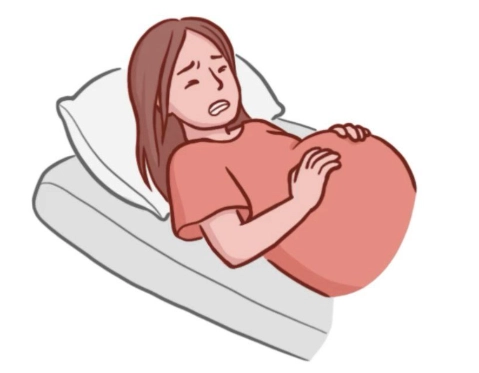
I remember a client, Lisa, who felt contractions only on her left side for days. She thought it was gas. Turned out her baby was sunny-side up, causing uneven pressure. Key detail: note if the pain radiates to your back or legs. That can hint at back labor, which often starts unilaterally.
Is This Normal or a Sign of Trouble?
Mostly normal, but with caveats. The American College of Obstetricians and Gynecologists notes that uterine activity can be irregular late in pregnancy. One-sided contractions often stem from:
- Baby's position: If they're lying on one side, say the left, contractions might localize there.

- Round ligament pain: These ligaments stretch, causing sharp, one-sided twinges.
- Braxton Hicks practice: Your uterus is rehearsing, sometimes unevenly.
But here's the non-consensus bit: many blogs say it's always fine. Not true. If contractions are severe, constant, or paired with bleeding, it could signal placental abruption or uterine rupture—rare but serious. I've seen a case where one-sided pain was early preterm labor. Trust your gut; if something feels off, it might be.
Quick Check: Hydrate and lie down. If contractions fade, it's likely Braxton Hicks. If they intensify or become regular, even on one side, think labor.
Braxton Hicks vs. Real Labor: The Telltale Differences
This trips up so many first-time moms. Let's break it down without jargon.
| Feature | Braxton Hicks Contractions | Real Labor Contractions |
|---|---|---|
| Pattern | Irregular, no rhythm | Regular, get closer over time |
| Intensity | Mild, don't strengthen | Increase in pain, peak and fade |
| Location | Often one-sided or scattered | Start localized, spread to whole uterus |
| Response to Movement | Ease with walking or rest | Persist regardless of activity |
| Duration | Short, 30-60 seconds | Longer, 60-90 seconds |
One-sidedness doesn't rule out labor. Early labor can start unilaterally, especially if your baby isn't centered. Time them: use an app or old-school clock. If they're every 5 minutes for an hour, call your provider, even if they're just on the right.
A common mistake? Waiting for symmetry. My friend waited for contractions to spread, and by the time she got to the hospital, she was 8 cm dilated. Don't be her.
How to Time Contractions Accurately
Grab a notebook. Note when a contraction starts and ends. Do this for at least an hour. If the intervals shorten—say, from 10 minutes to 7 minutes—it's progressing. One-sided or not, regularity is the clue.
When to Call Your Doctor or Rush to the Hospital
Don't overthink this. Here's a simple list—print it out.
- Call your doctor now if: Contractions are regular (every 5 minutes), you have vaginal bleeding, fluid leaks (could be water breaking), or fetal movement drops sharply.
- Go to the hospital immediately if: Pain is severe and one-sided, like a knife stab, or you feel dizzy or faint. This could be placental abruption.
- Monitor at home if: Contractions are irregular, mild, and ease with hydration. But set a time limit—if they last over 2 hours without change, call anyway.
Hospitals like Mayo Clinic advise not delaying for classic symptoms. I've heard nurses say, "We'd rather check you and send you home than miss something." Your anxiety is valid; use it to act.
A Real-Life Case: Sarah's 39-Week Scare
Sarah was 39 weeks, first pregnancy. For two days, she had contractions only on her right side—tightening every 20 minutes. She thought it was false labor. But they didn't go away with rest. Her baby's kicks slowed. She called her OB, who said come in. Turns out, the baby was posterior, and contractions were uneven due to pelvic pressure. Sarah was in early labor, but the one-sidedness masked it. She delivered a healthy boy 12 hours later.
The lesson? Asymmetry doesn't mean safety. Sarah's instinct to call saved stress. She told me, "I almost brushed it off because it wasn't textbook." Textbook is overrated.
Your Burning Questions Answered
Wrapping up, one-sided contractions at 39 weeks are usually your body's quirky way of prepping. But they're not a free pass to ignore. Track them, trust your instincts, and when in doubt, get checked. Your baby's arrival is close—stay informed, stay calm.
Reader Comments