What to Expect in This Guide
- How Do Early Pregnancy Tests Actually Work?
- When is the Right Time to Take a 1 Month Pregnancy Test?
- Choosing the Best Test for Early Detection (A Real-World Comparison)
- Step-by-Step: How to Take a Test for the Most Accurate Result
- Interpreting the Results: Lines, Pluses, and Words
- You Got a Positive Test at 1 Month: What Now?
- Frequently Asked Questions About 1 Month Pregnancy Tests
- Final Thoughts and My Personal Advice
So you're sitting there, a few days late, maybe feeling a bit off, and that little thought pops into your head: could I be pregnant? Suddenly, the world of early pregnancy tests, which seemed straightforward before, feels like a maze. You've probably heard the term "1 month pregnancy test" thrown around, but what does it really mean? Is it accurate? When exactly should you take it? And with so many boxes on the pharmacy shelf, which one do you even choose?
Let's clear the air right away. The phrase "1 month pregnancy test" is a bit of a misnomer. Most people use it to mean a test you take when you're about a month along from your last menstrual period (LMP), or roughly two weeks after conception. That's typically the earliest you can reliably test at home. But here's the thing – it's less about the calendar month and more about the science of the hormone hCG. That's the key player in this whole drama.
I remember helping a friend through this. She was so anxious she bought three different brands. The first one, taken too early, was negative. The suspense was awful. It's that waiting game that drives so many of us to search for answers online. This guide is here to walk you through every step, bust the myths, and give you the straight facts you need to navigate this uncertain time.
How Do Early Pregnancy Tests Actually Work?
It all boils down to one hormone: human chorionic gonadotropin, or hCG. Think of it as the first official announcement from a potential pregnancy. This hormone is produced by cells that will eventually form the placenta, and it starts showing up in your bloodstream very soon after a fertilized egg implants in your uterine lining.
Implantation usually happens 6 to 12 days after ovulation. Once it does, hCG levels start to double roughly every 48 to 72 hours. Home pregnancy tests are clever little pieces of technology designed to detect this hormone in your urine. They contain antibodies that are specifically shaped to bind to the hCG molecule. If hCG is present and binds, it triggers a chemical reaction that produces the colored line (or plus sign, or digital word) you're looking for.
It's fascinating, really. Your body starts this incredible biochemical process, and a simple stick you pee on can pick up the signal. But this is also where the first major point of confusion lies. A test can only detect what's there. If you test before implantation is complete, or before your hCG has risen to a detectable level, you'll get a negative – even if you are pregnant. This is the infamous "false negative," and it's the most common reason for disappointment with an early 1 month pregnancy test.
When is the Right Time to Take a 1 Month Pregnancy Test?
This is the million-dollar question. Timing isn't just everything; it's the only thing when it comes to avoiding unnecessary stress and wasted money on tests.
The standard, and most reliable, advice is to wait until the first day of your missed period. Why? Because by that point, if you are pregnant, hCG levels are almost always high enough for any over-the-counter test to detect. But let's be honest, waiting that long can feel impossible when you're in the thick of it. The urge to test early is powerful.
So, what's the "earliest" for a 1 month pregnancy test? Some tests, marketed as "early result" or "6 days before your missed period," have high enough sensitivity to potentially detect a pregnancy that early. But – and this is a big but – their accuracy is lower that far out. The FDA requires these tests to be about 99% accurate on the day of your missed period. The "6 days early" claim might be based on a lab study where they detected pregnancy in some women, but not all. Your mileage will vary dramatically.
If you can't wait, at least wait until 10-12 days after ovulation. You'll have a much better shot.
Factors That Can Throw Off Your Test Timing
Your cycle isn't a robot. These things can mess with the ideal test day:
- Irregular Cycles: If your cycle length changes month-to-month, predicting your missed period is guesswork. You might think you're "late" when you're not, or vice-versa.
- Ovulation Day: You might have ovulated later than you think. Apps are estimates, not oracles. A later ovulation means a later implantation and later hCG rise.
- Implantation Time: As mentioned, it can take up to 12 days. A later implantation means a later positive test.
My personal take? The marketing on some of these "ultra-early" tests can feel a bit predatory. They sell hope, which is exactly what an anxious person wants to buy. But setting realistic expectations is kinder in the long run.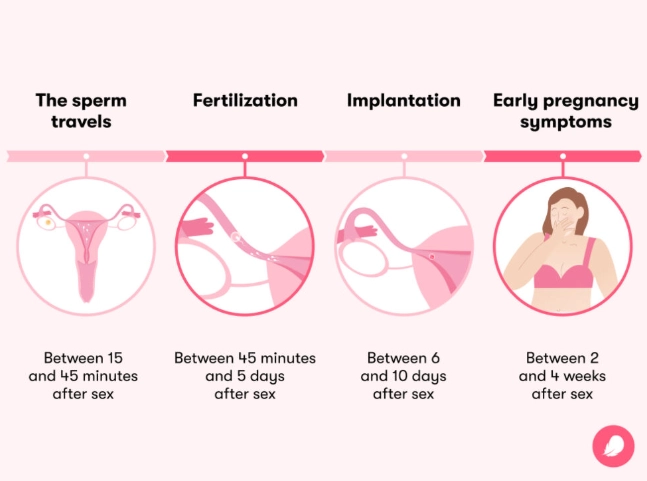
Choosing the Best Test for Early Detection (A Real-World Comparison)
Walk down the pharmacy aisle and it's overwhelming. Sticks, strips, cups, digital, non-digital, pink dye, blue dye. How do you pick? The best 1 month pregnancy test for you depends on what you value most: early detection, clearness of result, or cost.
Let's break down the main types with a no-nonsense comparison.
| Test Type | How It Works | Best For | Potential Drawbacks | Early Detection Claim |
|---|---|---|---|---|
| Early Result (Mid-Stream) (e.g., First Response Early Result) |
You pee directly on the absorbent tip. Uses pink dye. | People who want the earliest possible detection. Often the most sensitive. | More expensive. Can be messy. Pink dye can sometimes show faint "evaporation lines" mistaken for positives. | 6 days before missed period |
| Digital (e.g., Clearblue Digital) |
You pee on a stick, and a screen shows "Pregnant" or "Not Pregnant." | Anyone who hates interpreting lines. Removes all guesswork. | Most expensive. Less sensitive than top-tier early tests. Requires more hCG. Battery can die. | 5 days before missed period (some versions) |
| Test Strips (Bulk packs online) |
You collect urine in a cup and dip the strip. | Budget-conscious testers, people who test frequently (like those tracking fertility). | Less user-friendly. Requires a cup. Can be less consistent in quality. | Varies by brand; some are very sensitive. |
| Rapid Result (Standard store brands) |
Classic mid-stream or dip test. Often blue dye. | Testing on or after the day of your missed period when cost is a factor. | Blue dye is notorious for "dye runs" or faint, ambiguous lines that look like positives but aren't. | Day of missed period |
If your primary goal is to detect a potential pregnancy at the one-month mark, sensitivity is your guiding star. Look for tests that advertise sensitivity of 10 mIU/mL or lower. The U.S. Food and Drug Administration (FDA) regulates these tests, so their stated sensitivity is a reliable starting point. For the most authoritative information on how pregnancy tests work and are regulated, the FDA's medical device pages are an excellent resource.
A Quick Ranking of What Matters for Early Testing
- Sensitivity (mIU/mL): The lower the number, the better for early testing. This is non-negotiable.
- Ease of Use: Can you handle it easily first thing in the morning? Stress and shaky hands are real.
- Readability: Is the result clear and unambiguous? Faint lines cause massive anxiety.
- Cost: If you think you'll need to test multiple times, bulk strips might be the pragmatic choice.
Step-by-Step: How to Take a Test for the Most Accurate Result
You've bought the test. Now, don't mess it up by making simple mistakes. Follow these steps to give your 1 month pregnancy test the best chance of being right.
First, read the instructions that come in the box. I know, I know, nobody does. But different brands have different timing (holding the tip in urine for 5 seconds vs. 10 seconds, waiting 3 minutes vs. 5 minutes to read). This stuff matters.
Here’s a general guide:
- Collect: Use FMU if possible. If not, try to hold your urine for 3-4 hours to concentrate it.
- Prepare: Have a clean, flat surface ready. Start a timer on your phone.
- Execute: Pee on the stick (or into the cup) as directed. Don't over-saturate it.
- Wait: Place it flat and start your timer. Do not pick it up and stare at it under the light. Walk away. Set a timer and go do something else for the exact time stated in the instructions.
- Read: Check the result only within the time window specified (usually 3-5 minutes). Results read after 10 minutes are invalid and can show evaporation lines.
- Dispose: Wrap it up and throw it away. Re-checking an old test hours later is a one-way ticket to confusion city.
What about drinking water? If you're gulping down liters to make yourself pee, you're diluting the very hormone you're trying to detect. For an early 1 month pregnancy test, that's a surefire way to get a false negative.
Interpreting the Results: Lines, Pluses, and Words
This is where deep breaths are needed. A positive result is usually straightforward, even if the line is faint. Any second line, no matter how light, is considered a positive. It means hCG is present. A faint line usually just means lower levels of the hormone, consistent with very early pregnancy.
A negative result means no hCG was detected at the test's sensitivity threshold at that moment in time. It does not definitively mean you are not pregnant if you tested early. This is the hardest concept to accept when you're hoping for a baby.
Digital tests remove this ambiguity with their words. But remember, they often require more hCG to trigger a "Pregnant" reading, so they may not turn positive as early as a super-sensitive line test.
 Invalid results happen. If no control line appears, the test didn't work. Get a new one.
What Can Cause a False Positive or False Negative?
False positives (a positive test when you're not pregnant) are rare but can happen due to:
- Certain medications containing hCG (like some fertility drugs).
- Rare medical conditions like ovarian tumors.
- Chemical pregnancy (a very early miscarriage that occurs shortly after implantation). The test was technically correct for a short time.
- Reading an evaporation line after the valid time window.
False negatives are much more common. Causes include:
- Testing too early (the #1 reason by a mile).
- Using diluted urine (not using FMU).
- Not following the test instructions correctly.
- An expired or faulty test.
- Ectopic pregnancy (which sometimes produces hCG more slowly).
If you get a negative result but still have no period in a few days, retest. If you get a positive result, it's time for the next step.
You Got a Positive Test at 1 Month: What Now?
First, congratulations! Or, if this is unexpected, take a moment to process. Either way, a positive 1 month pregnancy test is the starting line, not the finish line.
Your immediate next steps should be:
- Call Your Healthcare Provider. This is step one. Don't just wait. Most offices will want to see you around 8 weeks from your last period, but they'll give you specific advice based on your health history. They can also confirm the pregnancy with a blood test, which measures the exact amount of hCG, giving more information than a urine test. For reliable information on prenatal care guidelines, you can refer to resources from the American College of Obstetricians and Gynecologists (ACOG).
- Start (or Continue) Taking Prenatal Vitamins. Folic acid is crucial in the earliest weeks for preventing neural tube defects.
- Adjust Lifestyle Habits. If you drink alcohol or smoke, now is the time to stop. Discuss any prescription medications with your doctor.
- Listen to Your Body. Fatigue, nausea, and breast tenderness are common early signs. But remember, every pregnancy is different. Some people feel nothing at one month.
It's normal to feel a mix of excitement and anxiety. The early weeks are a time of waiting. Try to focus on taking care of yourself one day at a time.
Frequently Asked Questions About 1 Month Pregnancy Tests
Can a 1 month pregnancy test be wrong?
Yes, but usually it's wrong in the direction of a false negative (saying you're not pregnant when you are). If you follow the instructions correctly and read the result within the time frame, a positive result is highly reliable. A negative result is only reliable if you take it on or after the day of your missed period.
How soon after unprotected sex can I test?
This is a huge misconception. You can't test the next day. Sperm can live for up to 5 days, ovulation has to happen, fertilization has to occur, the egg has to travel and implant (6-12 days), and then hCG production starts. Realistically, you cannot get a valid positive until at least 10-12 days after sex that resulted in conception, and 14 days is more reliable. Testing 2-3 days after sex is a complete waste of a test.
What's the difference between a 1 month pregnancy test and a blood test?
Blood tests, done at a doctor's office or lab, are the gold standard. They come in two flavors:
- Qualitative: Just says "yes" or "no" like a urine test, but is more sensitive.
- Quantitative (beta hCG): This gives you an exact number. This is powerful because your doctor can have you retest in 48 hours to see if the number is doubling appropriately, which is a good early sign of a progressing pregnancy.
I have symptoms but a negative test. Why?
PMS symptoms and early pregnancy symptoms are caused by the same hormone: progesterone. So bloating, fatigue, sore breasts, and mood swings can happen whether you're pregnant or about to get your period. It's a cruel trick of biology. Symptoms alone are not a reliable indicator of pregnancy. Only the test (or your period arriving) can tell you.
Are cheap pregnancy test strips as good as brand names?
Often, yes. Many of the bulk strips you buy online have sensitivities comparable to big brands. The main difference is in the casing and ease of use. The strip itself uses the same basic technology. The risk is in quality control from less reputable brands. If you go this route, read reviews carefully. For peace of mind with an early 1 month pregnancy test, a known brand with a proven sensitivity might be worth the extra few dollars.
Final Thoughts and My Personal Advice
Navigating the world of early pregnancy testing is an emotional journey. The "1 month pregnancy test" is a tool, a very good one, but it's not a crystal ball. Its accuracy is completely tied to biology and timing.
If I could give one piece of advice, it's this: Be kind to yourself during the wait. The anxiety is normal. The over-analyzing of every twinge is normal. But try to channel that nervous energy into something productive—go for a walk, watch a funny movie, dive into a book. The result will be what it will be, and no amount of obsessive testing before it's time will change the outcome.
Remember, a home pregnancy test is just the first step. Regardless of the result, your next move is to consult with a healthcare professional for confirmation and to discuss your options and next steps. They are your best resource for personalized, accurate care.
I hope this guide has taken some of the mystery and stress out of the process for you. Wishing you clarity and peace of mind, whatever your path may be.
Reader Comments