Let's cut to the chase. You had unprotected sex or a contraception mishap, and now you're in that agonizing wait. The internet is full of promises about knowing immediately, but the biology tells a different, more nuanced story. The short, honest answer is: you cannot get a definitive, reliable "yes" or "no" from a home pregnancy test within 72 hours of conception. Your body needs time to produce enough of the pregnancy hormone (hCG) for detection. But that doesn't mean you're completely in the dark. This guide will walk you through what is scientifically possible in that first 72-hour window, what signs are often misinterpreted, and the exact, actionable steps to take for peace of mind.
What You'll Find in This Guide
The Biology of the First 72 Hours: What's Actually Happening
To understand why 72 hours is such a tight window, you need to know the timeline. Conception—when sperm meets egg—usually happens in the fallopian tube. That fertilized egg (now called a zygote) then begins a slow journey toward the uterus. This trip takes about 3-4 days. So, for the first 72 hours, the potential pregnancy isn't even in the uterus yet. It's still traveling.
The critical event for detection is implantation. This is when the embryo burrows into the uterine lining, which typically occurs 6-10 days after ovulation (and conception). Only after implantation does your body start producing significant amounts of human Chorionic Gonadotropin (hCG), the hormone all pregnancy tests look for.
Think of it like sending a letter. Conception is dropping the letter in the mailbox. Implantation is the letter arriving at its destination. The hCG production is the recipient sending a confirmation text. You can't get the confirmation until the letter arrives.
The Bottom Line: In the first 72 hours post-conception, no detectable hCG is being produced. Any physical feelings you have are unrelated to pregnancy hormones. They're caused by progesterone, which rises after ovulation whether you're pregnant or not.
Symptoms vs. Real Signs: What You Might Feel (And What It Means)
This is where anxiety plays tricks on you. You might be hyper-aware of every twinge. Let's separate early pregnancy symptoms from post-ovulation normalcy.
True early pregnancy symptoms—caused by hCG and other shifts—simply don't show up that fast. What you're likely noticing is the effect of progesterone, which peaks about a week after ovulation and causes symptoms remarkably similar to early pregnancy.
| What You Might Feel (72 Hours In) | Likely Cause | Pregnancy-Related? |
|---|---|---|
| Breast tenderness or fullness | Post-ovulation progesterone surge | Unlikely this early |
| Fatigue or tiredness | Progesterone, stress, anxiety | No |
| Lower abdominal cramping or twinges | Normal post-ovulation cramps (mittelschmerz) or intestinal gas | No (Implantation cramping happens later, days 6-10) |
| Mood swings | Hormonal fluctuations and stress | No |
| Increased sensitivity to smell | Possible progesterone effect, but more common later with hCG | Very rare this early |
I've worked with hundreds of women trying to conceive, and the number one mistake is symptom-spotting in the first few days. It creates immense stress and is almost always misleading. Your body is doing its normal post-ovulation thing.
How Soon Can Tests Actually Detect Pregnancy?
Let's talk about detection methods, from fastest to most reliable.
Blood Tests (Quantitative hCG test)
This is the gold standard for early detection. A blood test at a lab can detect hCG levels as low as 5 mIU/mL. It can potentially give a positive result 7-12 days after conception, but that's still well beyond our 72-hour window. Even the most sensitive blood test needs implantation to have occurred and a day or two for hCG to build up in the bloodstream.
Early Result Home Pregnancy Tests (URPTs)
These over-the-counter tests claim to detect pregnancy "5 days before your missed period." Their sensitivity varies, but many detect hCG at 25 mIU/mL. The key phrase is "before your missed period," not "after conception." If you have a 28-day cycle and ovulate on day 14, 5 days before your missed period (day 23) is still 9 days after conception. Still not 72 hours.
Taking one of these tests at 72 hours is a waste of money and will only add to your anxiety when it's negative.
Ultrasound
Absolutely not possible. A gestational sac isn't visible on an ultrasound until hCG levels reach about 1500-2000 mIU/mL, which is weeks after conception.
Your 72-Hour Action Plan: Steps to Take Right Now
Instead of spiraling, channel that energy into a practical plan. Here’s what you can actually do in the first three days.
- Step 1: Note the Date and Your Cycle. Write down the date of the unprotected sex. If you track your cycles, note where you think you were in your ovulation cycle. This date is your anchor for all future testing.
- Step 2: Consider Emergency Contraception (If Applicable). If it's been less than 72-120 hours (depending on the type), emergency contraception like Plan B (levonorgestrel) or Ella (ulipristal acetate) is an option. It works primarily by delaying ovulation. The American College of Obstetricians and Gynecologists (ACOG) provides clear guidelines on its use and effectiveness. This is a time-sensitive decision.
- Step 3: Pause the Symptom Surveillance. Seriously, stop Googling every cramp. Acknowledge the anxiety, but remind yourself that any physical sensations right now are not pregnancy indicators.
- Step 4: Plan Your Test Date. Mark your calendar for the first day of your expected period. That is the most reliable day to take a standard home pregnancy test using first-morning urine. If you can't wait, plan to test no earlier than 12-14 days after the date of conception/ovulation. Testing earlier almost guarantees ambiguity.
- Step 5: Take Care of Your Mental Health. The two-week wait is brutal. Find distractions—a new series, a project, time with friends. Avoid pregnancy forums; they'll fuel comparison and anxiety.

Common Mistakes Even Smart People Make
After a decade in reproductive health education, I've seen the same errors repeated.
Mistake 1: Testing with diluted urine. You're anxious, so you test in the afternoon after drinking three glasses of water. hCG is most concentrated in your first morning urine. Testing later in the day, especially if you're well-hydrated, can give a false negative even if you're past the detection window.
Mistake 2: Misreading evaporation lines. You stare at the test window long after the instructed time (usually 5-10 minutes). A faint, colorless line appears. That's an evaporation line, not a positive. A true positive has color, even if it's faint, and appears within the time frame.
Mistake 3: Assuming a negative is definitive too early. A negative test at 10 days post-conception isn't a final answer. Implantation can happen as late as day 12, shifting your whole timeline. The only definitive negative is a negative test after a missed period, followed by the arrival of your period.
Mistake 4: Ignoring the possibility of an early chemical pregnancy. Sometimes a very early positive turns into a negative a few days later and is followed by a period. This is often a chemical pregnancy (a very early miscarriage). It's more common than people realize. It means conception and implantation occurred, but the pregnancy wasn't viable. It doesn't mean you did anything wrong, but it's a reason not to test extremely early—it can lead to emotional whiplash.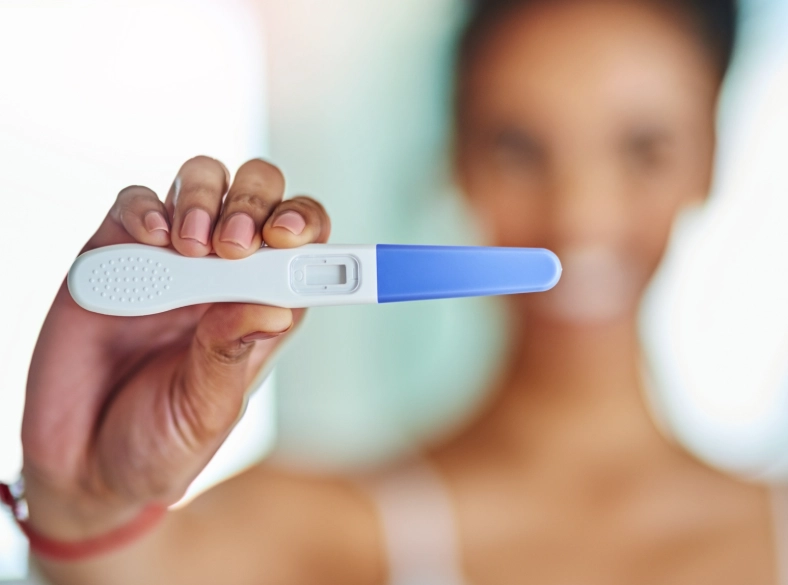
Your Burning Questions Answered
I had implantation bleeding 4 days after sex. Does that mean I'm pregnant?
Implantation bleeding is a debated concept, but if it occurs, it typically happens 6-10 days after ovulation/conception. Spotting at 4 days is highly unlikely to be related to implantation. It could be unrelated spotting, irritation, or a sign of your approaching period. It's not a reliable indicator of pregnancy at that point.
Can a doctor tell if I'm pregnant at 72 hours with a pelvic exam?
No. There are no physical changes to the cervix or uterus detectable by a manual pelvic exam that early in a pregnancy. A doctor would rely on the same science we've discussed: waiting for enough hCG to be present for a blood or urine test.
I feel nauseous already. Isn't that a sure sign?
Morning sickness is caused by rising hCG levels and rarely, if ever, begins before a missed period. Nausea at 72 hours is almost certainly caused by something else: anxiety, a mild stomach bug, something you ate, or even the power of suggestion. I've seen anxiety-induced nausea mimic pregnancy symptoms perfectly.
What's the absolute earliest a home test has ever been positive?
In rare cases, with very early implantation (day 6) and a super-sensitive test, someone might get a faint positive 8-9 days after conception. But presenting this as a common possibility does more harm than good. It sets an unrealistic expectation and leads to disappointment and wasted tests for the vast majority. Planning for the typical timeline (day of missed period) is the most sensible approach.
If I can't know now, what should I do about medications/alcohol I've consumed?
This is a smart and responsible concern. The general medical advice, as noted by sources like the CDC, is that the risk from exposures in the very early days post-conception (before implantation) is typically all-or-nothing, meaning it's unlikely to cause birth defects but might interfere with implantation itself. However, once you have a positive test or miss a period, it's time to discuss all medications and habits with your doctor. For now, if you're in the trying-to-conceive phase, adopting a "precautionary principle" lifestyle isn't a bad idea.
The wait to know if you're pregnant is one of the most emotionally charged periods. The desire for immediate certainty is powerful, but biology operates on its own schedule. Within 72 hours, your most powerful tool isn't a test strip; it's information and a plan. Use this time to get your facts straight, make any urgent decisions about emergency contraception, and mentally prepare for a proper test at the right time. The answer will come. Breathe, distract yourself, and trust the process.
Reader Comments