Let's cut through the noise. A healthy pregnancy diet plan isn't about eating for two in terms of quantity. It's about eating twice as well. Your body is doing the most incredible work of building a human being, and the food you choose is the primary construction material. Forget restrictive rules and overwhelming lists. Think of it as upgrading your everyday eating to support this unique phase.
I've worked with hundreds of expecting mothers as a nutritionist, and the confusion is real. One client, Sarah, was so worried about mercury she cut out all fish, missing crucial brain-building omega-3s. Another, Maya, battled nausea by only eating plain crackers for weeks, leaving her exhausted. Their stories shaped this guide.
This isn't a rigid meal plan you must follow to the letter. It's a framework—a way to think about your plate, understand the key players (nutrients), and make confident choices that adapt to your changing body and tastes.
What's Inside This Guide
How to Build Your Pregnancy Plate: A Simple Visual Guide
Instead of counting calories, focus on filling your plate with quality foods. This visual method works for any meal.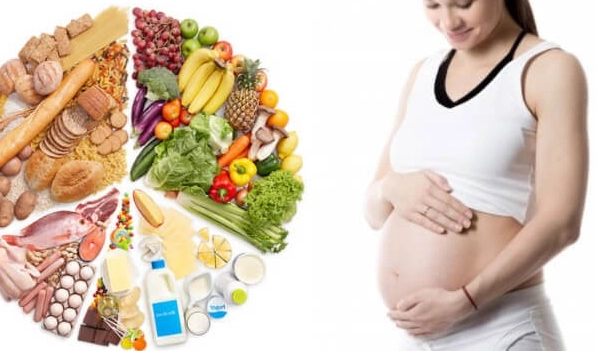
Why this works? It automatically balances your macros and micros. The fiber from the veggies helps with pregnancy constipation—a huge, often unspoken, pain point. The protein and complex carbs provide sustained energy, fighting that 3 PM crash.
A common mistake I see is loading up the carb quarter with refined grains like white bread or pasta. They spike your blood sugar and leave you hungry faster. Swap that for a complex carb, and you'll feel the difference in your energy levels.
The Key Nutrients You Can't Ignore (And Where to Find Them)
Certain nutrients become VIPs during pregnancy. Your prenatal vitamin is a crucial safety net, but food should be your primary source. Here’s the hit list.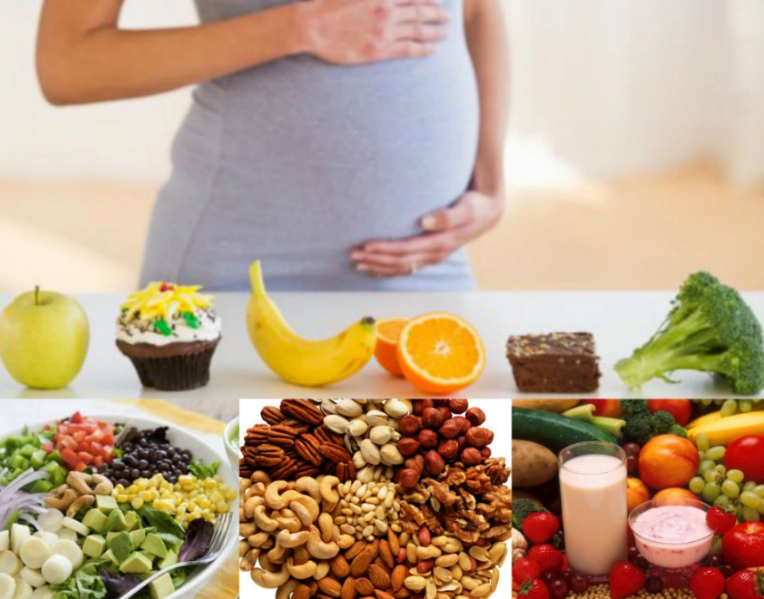
| Nutrient | Why It's Important | Top Food Sources |
|---|---|---|
| Folate/Folic Acid | Prevents neural tube defects in early pregnancy. Critical in first trimester. | Fortified cereals, lentils, spinach, asparagus, avocado, oranges. |
| Iron | Supports increased blood volume for you and baby. Prevents anemia and fatigue. | Lean red meat, poultry, lentils, spinach, fortified grains. Pair with Vitamin C for better absorption. |
| Calcium | Builds baby's bones and teeth. Protects your bone density. | Dairy (milk, yogurt, cheese), fortified plant milks, kale, canned sardines with bones. |
| Vitamin D | Helps body absorb calcium. Supports immune function. | Fatty fish, egg yolks, fortified milk/sunshine. Many need a supplement. |
| DHA (Omega-3) | Essential for baby's brain and eye development. | Salmon, trout, sardines, algae-based supplements, DHA-enriched eggs. |
| Choline | Works with folate for brain development. Often overlooked. | Eggs (the yolk!), lean beef, chicken, fish, broccoli, peanuts. |
See choline on that list? Most prenatal vitamins don't contain enough. Making a point to eat two eggs a few times a week is one of the simplest, most effective hacks for this.
Foods to Avoid: Beyond the Basic List
You know about raw fish and deli meat. Let's talk about the less obvious risks and the reasoning behind them.
High-Mercury Fish
Mercury can harm a developing nervous system. Avoid shark, swordfish, king mackerel, and tilefish completely. Canned tuna is okay in moderation (stick to light tuna, limit albacore). The goal isn't to avoid all fish—that's a mistake. It's to choose low-mercury options like salmon and shrimp regularly.
Unpasteurized Foods & Soft Cheeses
Listeria is the concern here. It's rare but dangerous. Avoid unpasteurized (raw) milk and juices. With cheese, the rule is simple: if it's soft and made from unpasteurized milk, skip it (like certain bries, camemberts, feta). Pasteurized versions of these cheeses are perfectly safe. Check the label.
Raw or Undercooked Eggs
Salmonella risk. This means no runny yolks (sorry), homemade Caesar dressing, raw cookie dough, or homemade eggnog. Commercially prepared products like mayo or cookie dough ice cream use pasteurized eggs and are fine.
Excessive Caffeine
More than 200mg daily may increase miscarriage risk. That's about one 12-oz coffee. Remember, caffeine is also in tea, soda, and chocolate.
My personal take? The anxiety over accidentally eating a piece of feta is often worse than the actual risk if the cheese was pasteurized. Read labels, ask at restaurants, and then relax. Stress isn't good for you either.
A Realistic Sample Day of Eating
Let's make this tangible. Here’s what a balanced, nutrient-dense day could look like. This is adaptable—swap items based on preference, cravings, or what's in your fridge.
- Breakfast: Greek yogurt parfait with berries, a sprinkle of walnuts, and a drizzle of honey. (Protein, calcium, antioxidants, omega-3s).
- Morning Snack: An apple with a tablespoon of almond butter. (Fiber, healthy fat).
- Lunch: Large salad with grilled chicken, quinoa, chickpeas, avocado, bell peppers, and a lemon-tahini dressing. (Covers all quarters of the pregnancy plate).
- Afternoon Snack: A hard-boiled egg and a few whole-grain crackers. (Choline, protein, complex carbs).
- Dinner: Baked salmon with a maple-mustard glaze, roasted sweet potato wedges, and sautéed garlic spinach. (DHA, vitamin A, iron, folate).
- Evening (if hungry): A small bowl of magnesium-rich cherries or a cup of herbal tea (like peppermint).
Notice the pattern? Protein and fiber at every meal to stabilize energy. Color at every meal for vitamins. It doesn't have to be gourmet.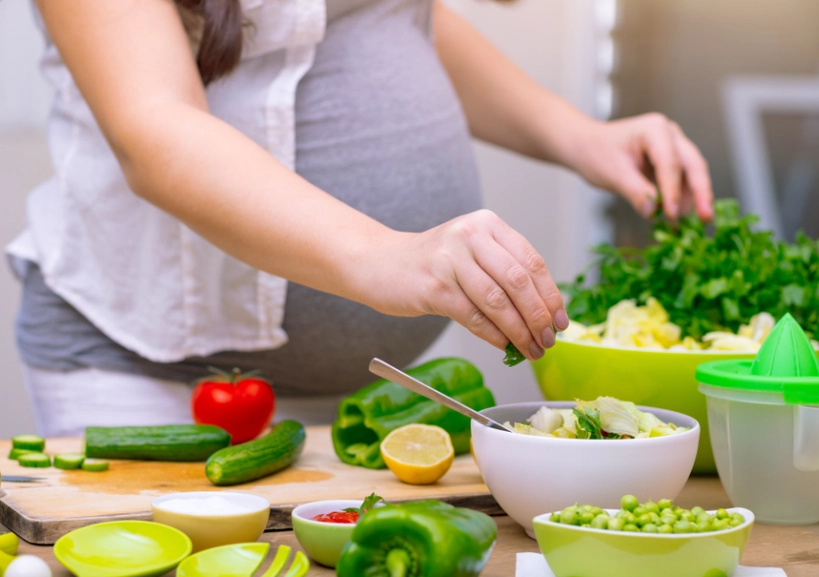
Managing Real Pregnancy Challenges
The perfect plan falls apart at 3 AM when you're nauseous or when a craving hits. Let's talk strategy.
Coping with Nausea and Morning Sickness
Forget three big meals. Eat small, frequent snacks. Keep bland, dry carbs by your bed (crackers, pretzels) and eat a few before you even sit up. Cold foods often smell less and are better tolerated—think smoothies, yogurt, chilled fruit. Ginger tea or candies can help. Sip fluids between meals, not with them, to avoid sloshing a full stomach.
Handling Intense Cravings
Craving pickles and ice cream? It's likely your body's cryptic way of asking for sodium and calcium. First, honor the craving in a reasonable portion. Then, ask yourself what the underlying nutrient might be and try to incorporate a healthier source of it later. Craving chocolate? Have a square of dark chocolate, then later have a magnesium-rich banana or some nuts.
Dealing with Heartburn and Constipation
Heartburn is brutal. Eat smaller meals, avoid lying down right after eating, and identify your triggers (often spicy, acidic, or fried foods). For constipation—increase fiber gradually (those veggies on half your plate!), drink plenty of water, and add gentle movement like walking. Prunes or prune juice are a natural remedy that works for many.
Your Top Pregnancy Diet Questions
Building your healthy pregnancy diet plan is a journey of listening to your body and giving it the best tools. Start with the plate model, prioritize those key nutrients, and be kind to yourself on the tough days. This isn't about perfection. It's about consistent, mindful choices that add up to nourish both you and your growing baby, one meal at a time.
Reader Comments