Quick Navigation
You've taken a test. Maybe it was negative, but your period is still a no-show. Or maybe you got a faint line and you're staring at it under every light in the house, trying to decide if it's real. The waiting game is brutal, and the question pounding in your head is simple: what is the absolute maximum number of days I have to wait to know for sure?
I remember that feeling all too well. The internet is full of conflicting advice—"test at 8 DPO!" (that's days past ovulation, for the uninitiated), "wait until you miss your period," "some tests detect it earlier." It's enough to drive anyone crazy. So let's cut through the noise. The short, unsatisfying answer is: there isn't one single "maximum" day for everyone. It's more like a timeline that depends entirely on how you're trying to confirm it.
But if you forced me to give a number for when you can be 100%, no-doubt-about-it certain? For most women with regular cycles, using the most definitive methods, you're looking at a window of about 7 to 14 days after a missed period for concrete confirmation. But stick with me, because that oversimplifies a lot. The real story is in the details of tests, hormones, and your own body.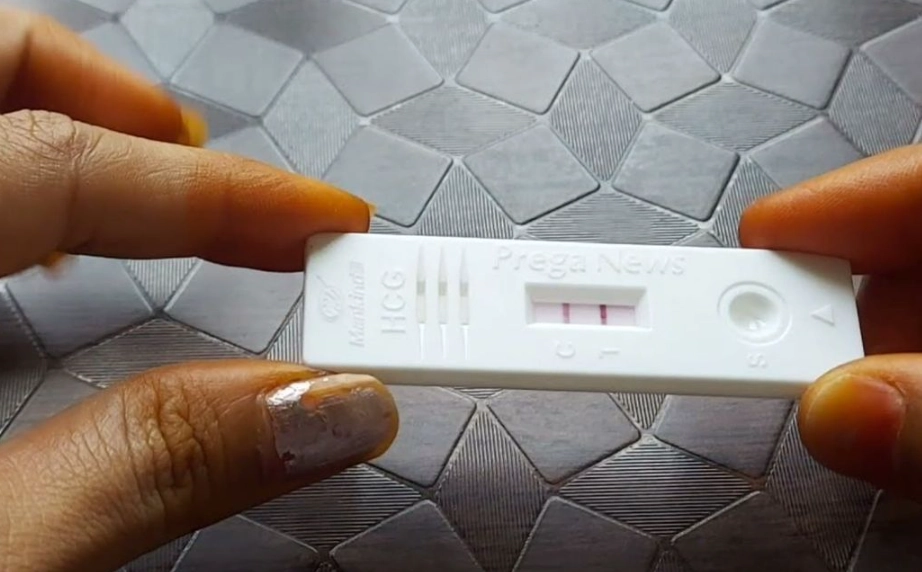
The Core Concept: Pregnancy isn't confirmed the moment sperm meets egg. It's confirmed when there's enough of the pregnancy hormone human chorionic gonadotropin (hCG) in your body for a test to detect it, or when a healthcare provider can physically see evidence on an ultrasound. The "maximum days to confirm pregnancy" is the point on your personal timeline where even the slowest-rising hCG or the least sensitive method would give a clear answer.
Breaking Down the Confirmation Timeline: From Maybe to Definitely
Think of confirming pregnancy like turning up the volume on a radio signal. At first, it's static (no hCG). Then, a faint, crackly station comes in (early positive on a super-sensitive test). Finally, it's crystal clear, loud, and you can even see the band playing (definitive confirmation). The time it takes to get to "crystal clear" varies.
The Home Pregnancy Test (HPT) Route
This is where most of us start. These tests work by detecting hCG in your urine. Their sensitivity is measured in mIU/mL (milli-international units per milliliter). A test with a sensitivity of 10 mIU/mL can detect lower levels of hCG than one rated for 25 mIU/mL.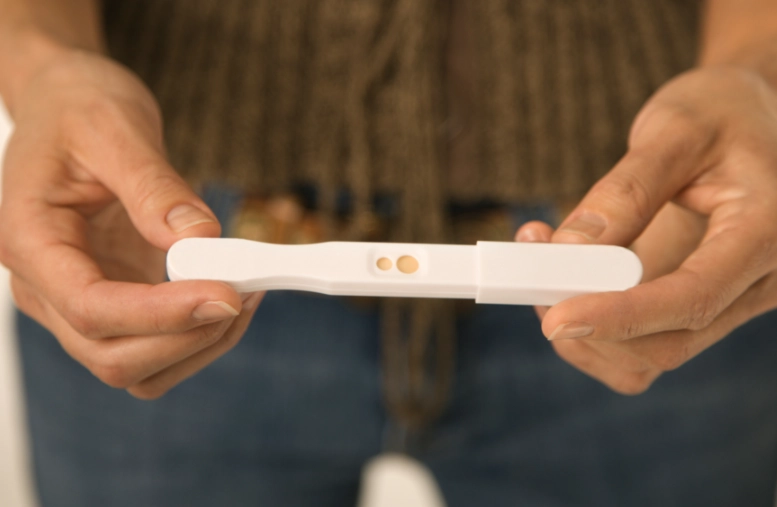
Here’s the practical timeline most people experience:
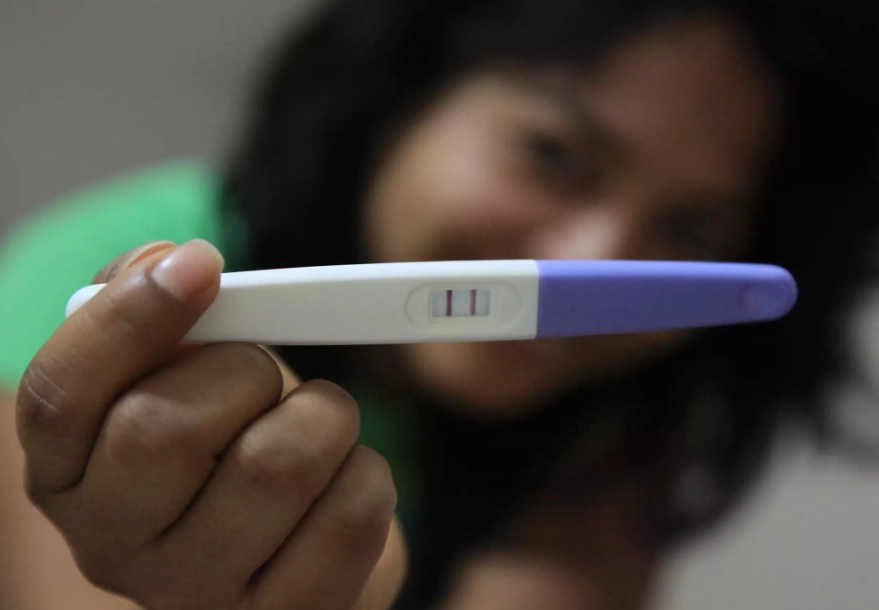
- Earliest Possible Detection: Some ultra-sensitive tests claim to detect hCG as early as 7-10 days after ovulation. Let's be honest, testing this early is a recipe for anxiety. Your hCG might only be at 5-10 mIU/mL, leading to infamous "evaporation lines" or false negatives. I've wasted more money on tests at 8 DPO than I care to admit.
- The "Recommended" Time: The first day of your missed period. By this point, for a viable pregnancy, hCG levels are usually high enough (around 50-100 mIU/mL or more) for any over-the-counter test to give a reliable positive if you are pregnant.
- The "Maximum" Wait for HPT Certainty: If you get a negative test on the day of your missed period but your period still doesn't arrive, wait 3-7 days and test again. Why? You might have ovulated later than you thought. If you test again a week after your missed period and it's still negative, it's highly unlikely you're pregnant (assuming a standard cycle and correct test use). So, for urine tests, the maximum practical window to confirm pregnancy or rule it out is about one week after a missed period.
A Big Caveat: A positive home test is a strong indicator, but it doesn't confirm a viable or uterine pregnancy. That requires a healthcare provider. A negative test a week after a missed period is usually trustworthy, but if your cycles are irregular or you have no period at all, this timeline is useless. You need to see a doctor.
The Blood Test (Quantitative hCG Beta Test)
This is the gold standard for early hormonal confirmation. Done at a lab or clinic, it measures the exact amount of hCG in your blood. It's far more sensitive than urine tests.
- Earliest Detection: Can detect hCG as low as 1-5 mIU/mL, often 6-8 days after ovulation.
- Definitive Numerical Result: It doesn't just give a yes/no. It gives a number. This is crucial because the doctor looks at the rise. In early viable pregnancies, hCG typically doubles every 48-72 hours.
- The "Maximum" Clarity Point: A single blood test can confirm the presence of hCG very early. However, to confirm things are progressing normally, you often need two tests, 48-72 hours apart, to check the doubling rate. So, while you might get a positive blood test 10-12 days after ovulation, definitive confirmation of a progressing pregnancy via bloodwork might take an additional 2-3 days. For the absolute maximum days to confirm pregnancy via blood test with doubling confidence, you're looking at maybe 14-16 days past ovulation (which could be around the time of your missed period or shortly after).
The Ultrasound Confirmation
This is the ultimate visual confirmation. No hormones, just pictures.
- Transvaginal Ultrasound: This can see a gestational sac in the uterus as early as 4.5 to 5 weeks of pregnancy (which is about 2.5 to 3 weeks after ovulation, or just after a missed period).
- Definitive Proof of Viability: The real milestone is seeing the fetal heartbeat. This is usually visible via transvaginal ultrasound around 6 to 7 weeks of pregnancy. For many women and their providers, this is the moment of true, undeniable confirmation.
So, if we're talking ultrasound?
The maximum days to confirm a viable pregnancy visually is usually by 7 weeks of pregnancy (calculated from the first day of your last menstrual period, or LMP). For someone with a regular 28-day cycle, that's about 3 weeks after a missed period.
Pro Tip from Experience: Many clinics won't even schedule that first "viability" ultrasound until you're at least 7-8 weeks along by LMP. It's frustrating to wait, but it's to ensure they can definitely see what they need to see and save you the worry of an inconclusive early scan.
The Factors That Stretch or Shrink Your Personal Timeline
Your friend got a blazing positive at 9 DPO. You got nothing until day 5 after your missed period. What gives? These variables are why the "maximum days" question is so personal.
| Factor | How It Affects Timing | What It Means for "Maximum Days" |
|---|---|---|
| Implantation Time | The fertilized egg implants 6-12 days after ovulation (most commonly 8-10 days). hCG production starts only after implantation. | A later implantation (day 11-12) automatically pushes back your entire detection timeline by several days. |
| hCG Doubling Rate | While 48-72 hours is typical, some healthy pregnancies have a slower initial rise. Also, non-viable pregnancies (chemical pregnancies, ectopics) often have slower or abnormal rises. | A slower rise might mean your hCG levels take longer to reach the threshold of a home test, extending your wait for a clear positive. |
| Test Sensitivity | As mentioned, a 10 mIU/mL test will show positive sooner than a 50 mIU/mL test. | Using a less sensitive test could mean you need to wait extra days for your hCG to climb high enough, even if you are pregnant. |
| Time of Day & Hydration | First-morning urine is most concentrated with hCG. Drinking lots of fluids dilutes your urine. | Testing with diluted urine in the afternoon could give a false negative early on, forcing you to re-test the next morning—adding a day to your wait. |
| Cycle Irregularity | If you don't know when you ovulated or your cycle length varies wildly, the "missed period" benchmark is meaningless. | This is the biggest wrench in the works. Your maximum days to confirm pregnancy becomes unknown; you must wait longer or rely on a blood test to establish a timeline. |
See? It's messy. That's why the blanket advice "wait until you miss your period" exists—it's a one-size-fits-most average that accounts for many of these variables.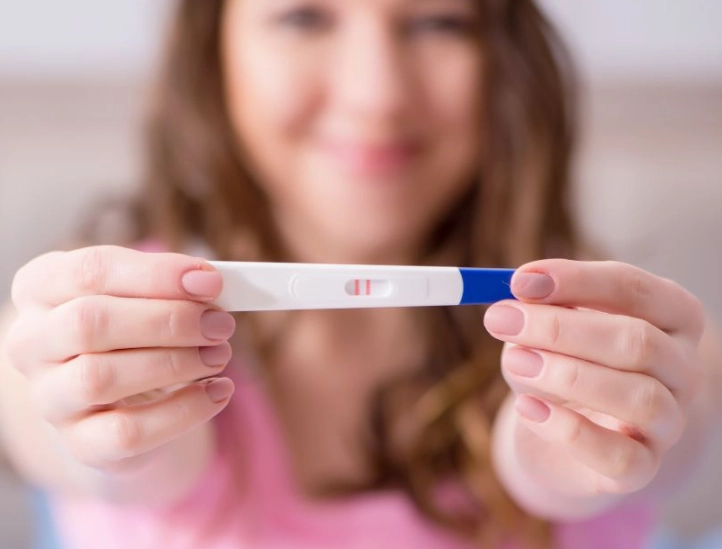
Action Plan: What to Do While You're Waiting (and When to Stop Waiting)
The waiting is the worst part. Here's a step-by-step, no-nonsense approach.
- Pick a Sensitive Test and Test at the Right Time. If you're testing early, get a test with a sensitivity of 10-25 mIU/mL. Use your first-morning urine. Read the instructions—yes, really. Set a timer. It sounds basic, but misreading the test window is a common source of anguish.
- Interpret the Result Realistically. A positive, even a faint one, is almost certainly positive (false positives are extremely rare). A negative is less trustworthy, especially if it's early. A negative test is only reliable if you follow it up later.
- The Follow-Up Test Rule. Got a negative but no period? Test again in 3-7 days. Got a faint positive? Test again in 48 hours with the same brand. The line should get darker as your hCG doubles.
- Call Your Healthcare Provider. Once you have a positive home test, call your doctor or midwife. They will guide you on the next steps, which are usually a blood test to confirm the hCG level and/or schedule an ultrasound. Don't rely on the internet or home tests past this point for medical confirmation.
When should you absolutely stop waiting and see a doctor?
- If you have a positive pregnancy test.
- If you have a negative test but your period is over 7-9 days late and you're usually regular.
- If you have symptoms like severe abdominal pain, dizziness, or bleeding along with a late period, regardless of test results (to rule out ectopic pregnancy).
- If your cycles are irregular and you have no idea when to expect a period.

Answering Your Burning Questions (The FAQ Section)
Let's tackle the specific questions swirling in your head right now.
The Final Word: From Uncertainty to Certainty
So, after all this, what's the takeaway on the maximum how many days to confirm pregnancy?
Think of it as a ladder of certainty, not a single day on a calendar.
Rung 1 (Earliest Hint): 7-10 days past ovulation with a super-sensitive blood test or, maybe, a very sensitive home test. Low certainty, high chance of false negative.
Rung 2 (Reliable Indicator): The day of your missed period with a standard home test. High certainty for a positive result.
Rung 3 (Hormonal Confirmation): 1 week after a missed period with a home test (for a definitive negative) or a quantitative blood test with a doubling pattern. Very high certainty.
Rung 4 (Visual/Clinical Confirmation): Around 6-7 weeks of pregnancy (about 3 weeks after a missed period for a regular cycle) with an ultrasound showing a fetal heartbeat. 100% medical certainty.
The journey from wondering to knowing has a different length for everyone. The variables of implantation, hCG rise, and your own cycle are the directors of this show. My biggest piece of advice? After you get that first positive at home, hand the reins over to a professional. Schedule that appointment. Let them use blood tests and ultrasounds to map out the rest of the timeline. It takes the guesswork and the agonizing wait off your shoulders and puts it where it belongs—in the realm of medical care.
For further, trustworthy reading on pregnancy testing and early fetal development, resources from the Mayo Clinic and the CDC are excellent places to start.
Try to breathe. The answer will come.
Reader Comments