Let's cut straight to it. You're here because you're in that agonizing wait. Maybe you're meticulously tracking ovulation, or perhaps you just have a feeling. You type "Is it possible to detect pregnancy at 2 weeks?" into Google, hoping for a definitive yes. The answer you'll find is almost universally "no," but that simple answer feels frustratingly incomplete. It doesn't address the why, or the confusion around those two weeks. I've been there, both personally and from talking to hundreds of women through my work. The problem isn't the biology; it's the calendar.
Most articles miss a crucial point: when we say "2 weeks pregnant," doctors and the rest of the world are often talking about completely different timelines. This mismatch is the root of the anxiety. So let's untangle this, not with medical textbook jargon, but with the clarity you need right now.
What You Need to Know
The #1 Reason for Confusion: Pregnancy Dating
This is the non-consensus hill I will die on. Almost every piece of content glosses over it, leading to massive misunderstanding.
In medicine, pregnancy is not dated from conception. It's dated from the first day of your last menstrual period (LMP). This is called gestational age. It seems counterintuitive because you aren't pregnant during your period. This system was established long before ultrasounds and is still used because menstrual dates are often easier to recall than ovulation dates.
Here’s the translation: If you ovulated and conceived roughly 14 days into a standard cycle, at the moment of conception, you are already considered 2 weeks pregnant by medical standards. So when you, in your mind, think "2 weeks after sex," your doctor is already calling you 4 weeks pregnant. This 2-week head start is the core of the communication breakdown.
When you search "detect pregnancy at 2 weeks," you're likely thinking of two weeks post-conception. But the internet, and even some poorly explained test kit leaflets, often use the medical "weeks pregnant" framework without clarifying. No wonder it's confusing.
Why Is 2 Weeks Too Early for a Reliable Test?
Forget the calendar for a second. Let's talk biology. A pregnancy test doesn't detect a baby; it detects a hormone called human Chorionic Gonadotropin (hCG).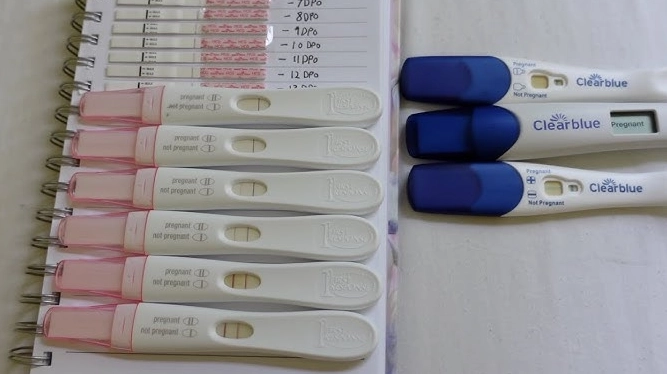
Here’s the sequence, step-by-step:
- Ovulation & Fertilization: An egg is released and fertilized. This is Day 0 of your mental count (but Week 2 of medical count).
- The Journey: The fertilized egg (now a blastocyst) travels down the fallopian tube for about 3-4 days.
- Implantation: This is the big event. The blastocyst must attach to the uterine lining. This happens, on average, 6-10 days after ovulation (DPO). It can be earlier or later. Nothing is detectable before implantation.
- hCG Production Begins: Only after implantation does the developing placenta start secreting hCG into your bloodstream.
- hCG Builds Up: The hormone needs time to double approximately every 48-72 hours before it reaches a concentration high enough to spill over into your urine in amounts a home test can catch.
So, at true 2 weeks post-conception (which is medical Week 4), you might be getting a positive if implantation happened early. But at medical Week 2? You haven't even ovulated yet. The entire process hasn't begun.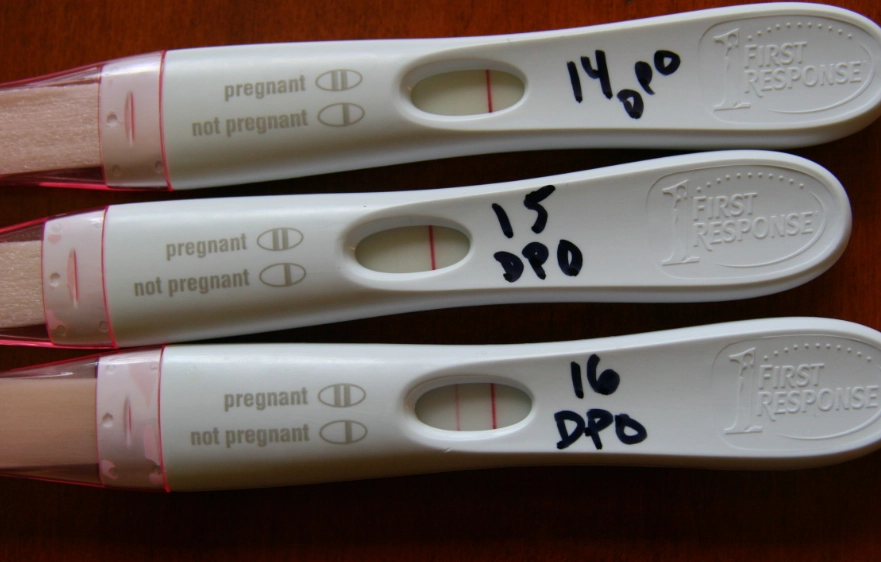
A Common Trap: "Early Result" tests advertise they can detect pregnancy "up to 6 days before your missed period." This is marketing at the edge of biology. For a woman with a perfect 28-day cycle, 6 days before a missed period is about 8-9 DPO. Implantation may have just occurred. Your hCG level could be 10 mIU/mL. While some super-sensitive tests claim to detect this, the chance of a false negative is extremely high. Testing this early often causes more stress than it provides answers.
What Are You Actually Feeling at 2 Weeks?
This is another area where well-meaning advice leads you astray. At 2 weeks gestational age (which is around ovulation), you feel nothing related to pregnancy. At 2 weeks post-conception (4 weeks gestational), you might feel something, but here's the expert nuance:
The early symptoms we all hear about—tender breasts, fatigue, mild cramping, even light spotting (implantation bleeding)—are primarily caused by the hormone progesterone. Progesterone rises in the second half of your cycle every month, pregnant or not, to prepare the uterine lining.
I've seen countless women symptom-spot themselves into certainty, only for their period to arrive. The body's signals are notoriously ambiguous in these early days. Implantation bleeding, for instance, is often just typical mid-cycle spotting re-branded. Relying on symptoms before a missed period is a recipe for an emotional rollercoaster.
The Realistic Timeline: When Can You Actually Test?
Let's move from theory to practical advice. Throw away the "weeks" and think in these terms:
| When to Test | What's Happening Biologically | Realistic Expectation |
|---|---|---|
| 7-10 Days Past Ovulation (DPO) | Implantation may be occurring or just completed. hCG is just starting. | Very high chance of false negative. Testing here is for data collectors/trackers, not for a definitive answer. It will likely cause anxiety. |
| Day of Expected Period | For most successful pregnancies, hCG is now high enough. | Good reliability. Many standard tests are over 99% accurate from this day forward when used correctly. This is the baseline I recommend. |
| 1 Week After Missed Period | hCG levels have had ample time to rise. | Maximum reliability. If you are pregnant and have a viable intrauterine pregnancy, a test will almost certainly be positive by now. A negative here is a strong indicator you are not pregnant. |
My rule of thumb, born from experience: The first day of your missed period is your green light. Anything before that is a gamble with your peace of mind.
Maximizing Your Test Accuracy
If you're going to test, do it right. Small mistakes can muddy the waters.
Use First Morning Urine
Especially for early testing, your first pee of the day is the most concentrated. hCG levels will be at their peak. If you test later in the day, drink normally, but avoid chugging gallons of water right before the test, as it can dilute your urine.
Read the Instructions (Yes, Really)
Every brand is slightly different. Some require a 5-second hold in the stream, others a 10-second dip in a cup. The read window also has a time limit (usually 5-10 minutes). Reading a faint line that appears an hour later is an evaporation line, not a positive. Set a timer.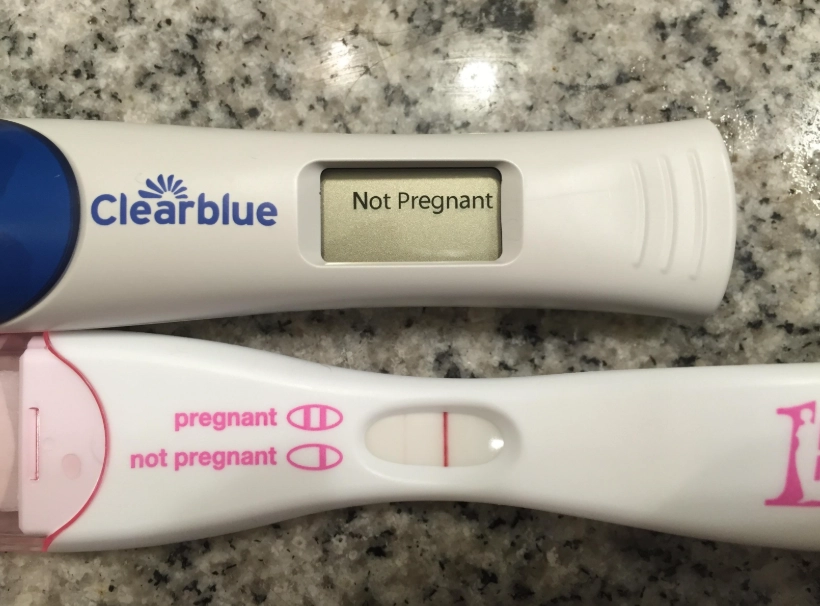
Consider Test Sensitivity
Sensitivity is measured in mIU/mL (milli-international units per milliliter). A test with 10 mIU/mL sensitivity can detect lower levels of hCG than one with 25 mIU/mL. Most major brands now offer "early detection" versions with higher sensitivity. If you must test early, choose one of these, but manage your expectations.
Your Action Plan After a Negative (or Positive) Test
Let's talk about what happens next, because the test is just the beginning.
Scenario A: Negative test on the day of your missed period. Don't panic. Wait 3-5 days. Your ovulation might have been later than you thought, pushing back implantation and hCG rise. Test again. If it's still negative and your period is MIA for over a week, it's time to check in with a doctor. Irregular cycles happen, and stress can delay ovulation.
Scenario B: Faint positive line. A line is a line, even a faint one. It means hCG is present. Congratulations are likely in order. To see the line get darker, test again in 48 hours with first morning urine. The darkness should increase as hCG doubles. Don't test every 12 hours; you won't see a difference and will worry unnecessarily.
Scenario C: Clear positive. Great! Your next step is to schedule an appointment with your OB-GYN or midwife. They typically won't see you until you're around 8 weeks gestational age (about 6 weeks post-conception) for a first prenatal visit and ultrasound. In the meantime, start taking a prenatal vitamin with at least 400 mcg of folic acid, avoid alcohol, smoking, and discuss any medications with your doctor.
The journey from wondering to knowing is tough. The two-week wait feels endless. But understanding the why behind the wait—the biological process and the dating confusion—can give you back a sense of control. Patience, while maddening, is the most accurate tool you have in these very early days.
Reader Comments