Quick Guide
- The Biological Stopwatch: Natural Conception Has a Limit
- When Medicine Intervenes: The Age of Assisted Reproduction
- The Other Side of the Coin: Risks and Realities of Pregnancy After 40 & 50
- Beyond Biology: The Ethical and Practical Elephant in the Room
- What You Can Actually Do: Steps and Considerations
- Wrapping It Up: It's More Than a Number
Let's cut right to the chase. You typed that question into Google, and you're probably expecting a simple number. Sixty? Maybe seventy? The truth is, the answer to "what is the oldest a woman can get pregnant" isn't a single age you can circle on a calendar. It's a tangled web of biology, modern medicine, ethics, and a few record-breaking stories that push the boundaries of what we thought was possible. I remember talking to a friend who was panicking at 38, convinced her window had slammed shut. The fear is real, and the information out there is a confusing mix of hope and harsh reality.
So, we're going to unpack it all. Not with dry, textbook language, but by looking at what actually happens, what doctors say, and what those rare headlines about women giving birth in their 60s and 70s really mean. Forget the hype for a second. We'll talk about your body's natural clock, the medical assists that can rewind it (a bit), and the serious stuff you need to consider long before you see those two pink lines.
The Biological Stopwatch: Natural Conception Has a Limit
Without any medical help, nature is pretty strict. A woman is born with all the eggs she'll ever have—about one to two million of them. Puberty kicks off with a few hundred thousand left, and that number just drops from there. It's not just about running out of eggs, though. The quality of those eggs declines with age. Think of it like the oldest book in a library; the information might still be there, but the pages are more fragile, and errors in the text (chromosomal abnormalities) become more common.
This decline isn't a slow, gentle slope. It's more like a curve that starts to steepen dramatically in the mid-30s. By the time a woman reaches her late 40s or early 50s, she enters menopause, marking the end of her natural reproductive years. Her ovaries stop releasing eggs and producing key hormones like estrogen and progesterone. So, when asking what is the oldest a woman can get pregnant naturally, we're usually talking about the perimenopausal period—those years leading up to menopause when cycles become irregular but ovulation can still occur sporadically.
The takeaway? While there are exceptional cases of natural pregnancy in the late 40s (and they make the news precisely because they're so rare), for the vast majority of women, the natural window for a healthy pregnancy closes by the early to mid-40s. The CDC's data on infertility clearly shows how fertility rates plummet after 35. It's a biological fact, not a judgment.
It feels unfair, doesn't it? Men can often father children much later in life. But female biology, focused on ensuring the best chance for a healthy offspring, sets this timeline. Understanding this natural limit is the first, and maybe most sobering, part of the answer.
When Medicine Intervenes: The Age of Assisted Reproduction
This is where the simple answer to "what is the oldest a woman can get pregnant" gets complicated. Assisted Reproductive Technology (ART), like In Vitro Fertilization (IVF), changes the game entirely. It doesn't reverse menopause, but it can work around some of the biggest age-related hurdles: egg quality and quantity.
The Donor Egg Scenario
Here's the key to most of those astonishing headlines about women in their 60s and 70s giving birth. In almost every single case, the pregnancy was achieved using a donor egg—a young, healthy egg from a woman in her 20s or early 30s—fertilized with sperm (from a partner or donor) and then implanted into the older woman's uterus. The uterus, interestingly, can often remain receptive and capable of carrying a pregnancy long after natural fertility has ended, provided a woman is in good general health.
So, the medical answer to what is the oldest a woman can get pregnant shifts. It's no longer about her egg supply, but about the health of her uterus and her overall physical capacity to endure pregnancy and childbirth. This pushes the potential age limit far beyond the natural boundary. The world record for the oldest mother is held by a woman in India who gave birth at 73 via donor-egg IVF. Cases in the 60s, while still extremely rare, are documented.
But—and this is a huge but—just because something is medically possible does not mean it is medically advisable, ethically straightforward, or legally permitted everywhere.
Using Your Own Eggs: The Success Rate Cliff
What if you want to use your own eggs? IVF can help, but it's not a magic wand. Success rates with a woman's own eggs are intimately tied to her age at the time the eggs are retrieved. IVF can give you better odds than natural conception at an older age, but it can't make a 45-year-old egg behave like a 25-year-old one.
43-44~5% or lessExtremely low success rates; donor eggs become the primary viable option.
| Woman's Age at Egg Retrieval | Approximate Live Birth Rate per IVF Cycle* (Using Own Eggs) | Key Considerations |
|---|---|---|
| Under 35 | ~50%+ | Highest success rates, lower risk of chromosomal issues. |
| 35-37 | ~35-40% | Noticeable decline begins; genetic testing often recommended. |
| 38-40 | ~20-25% | Significant drop; multiple cycles often needed. |
| 41-42 | ~10-15% | Very challenging; many clinics may advise donor eggs. |
| 45 and over | ~1-2% or less | Pregnancy with own eggs is exceedingly rare. |
*Rates are generalized from aggregate data like the Society for Assisted Reproductive Technology (SART) and can vary widely by clinic and individual health.
Looking at that table, the reality sinks in. By 45, the chance of having a baby with your own genetic material through IVF is very slim. This is why the conversation with a fertility specialist for women over 40 often pivots to donor eggs quite quickly. It's a tough, emotional pivot for many.
The Other Side of the Coin: Risks and Realities of Pregnancy After 40 & 50
Okay, so we've established that pregnancy at an advanced age is possible, especially with medical help. But possible doesn't equal easy or risk-free. This is the part that often gets glossed over in the feel-good news stories. Let's be brutally honest about the physical stakes.
For the Mother: Pregnancy is a physiological marathon. An older body faces more challenges. The risk of developing conditions like gestational diabetes and pregnancy-induced hypertension (including preeclampsia) increases significantly. The chance of requiring a Cesarean section is higher. There's also a baseline increased risk of underlying health issues like heart disease or diabetes that pregnancy can exacerbate. Carrying multiples (common with IVF) amplifies all these risks.
For the Baby: This is heavily influenced by whether the egg is the mother's own or from a donor. With a donor egg (from a young donor), the risk of chromosomal abnormalities like Down syndrome returns to the donor's age level, which is low. However, with the mother's own eggs, the risk rises steeply with maternal age. Other risks include higher rates of preterm birth and low birth weight, which are often linked to maternal health conditions during pregnancy.
It's not meant to scare you, but to inform you. Any reputable fertility clinic will conduct a thorough health screening—cardiac, metabolic, overall fitness—before agreeing to treat a woman over 45 or 50. They're not just checking your uterus; they're checking if your entire body can handle the strain. I've read forums where women feel this screening is intrusive or dismissive. From a medical ethics standpoint, it's absolutely necessary.
Beyond Biology: The Ethical and Practical Elephant in the Room
Let's step out of the doctor's office for a minute. The question of what is the oldest a woman can get pregnant isn't just medical. It's deeply personal and wrapped in ethical debates. Even if you pass every health test with flying colors, other questions loom.
Parenting is a long-term commitment. Becoming a first-time parent at 55 means you'll be 73 when your child graduates high school. You need to honestly assess your energy levels, your long-term health prospects, and your financial security. Will you have the stamina for sleepless nights, toddler tantrums, and teenage drama in your 60s and 70s? More grimly, what are the chances you'll see your child into adulthood, or meet your grandchildren? It's a harsh calculation, but a necessary one.
Then there's the child's perspective. Growing up with parents significantly older than their friends' parents can present social challenges. There's also the potential burden of caring for aging parents at a relatively young age. These aren't reasons not to do it, but they are factors that deserve serious, unflinching thought. Society judges this heavily, and while you can choose to ignore the judgment, you can't ignore the practical realities your child will live with.
On a broader scale, these practices raise ethical questions for the medical community. Should there be an age cutoff? Who decides? Is it right to use extreme medical intervention to achieve a pregnancy at an age far beyond natural limits? Different countries have different laws; some have strict age limits for IVF treatment, while others, like parts of the US, operate more on a clinic-by-clinic, case-by-case basis. The American Society for Reproductive Medicine (ASRM) has guidelines but no absolute bans, emphasizing comprehensive counseling instead.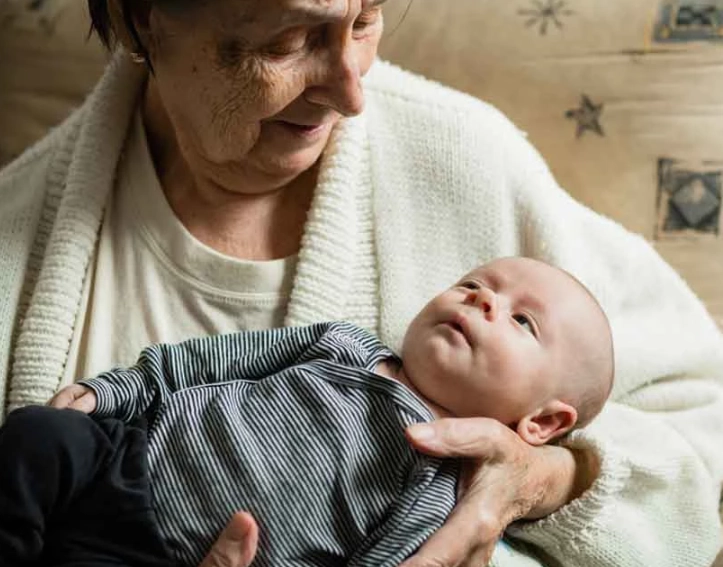
What You Can Actually Do: Steps and Considerations
If you're reading this and the clock is ticking loudly in your ears, feeling anxious isn't helpful. Taking informed action is. Here's a breakdown of steps, not in a rigid order, but as a flow of considerations.
First, know your own fertility. If you're in your 30s and thinking about delaying pregnancy, talk to your OB-GYN. Simple blood tests (like Anti-Müllerian Hormone or AMH) and an ultrasound (antral follicle count) can give a rough idea of your ovarian reserve. It's not a crystal ball, but it's data. It can help you make plans. I wish this was a standard check-up item for women in their early 30s.
Explore preservation. If you know you want children but not now, egg freezing (oocyte cryopreservation) in your late 20s or early 30s essentially pauses your biological clock. It's expensive and not a guarantee, but it preserves younger, healthier eggs for future use. It's an insurance policy with a high premium but potentially priceless payoff.
Seek expert guidance early. If you're over 35 and have been trying to conceive naturally for 6 months without success, don't wait. See a reproductive endocrinologist (a fertility specialist). The standard "try for a year" rule doesn't apply after 35 due to that accelerating decline. A specialist can run diagnostics, explain your real odds with various treatments (IUI, IVF with own eggs, IVF with donor eggs), and help you navigate the emotional rollercoaster. Websites like RESOLVE: The National Infertility Association are fantastic resources for finding support and reliable information.
Have the hard conversations. With your partner (if you have one): What are our limits? How many IVF cycles can we afford emotionally and financially? Are we open to using donor eggs or sperm? What about adoption or surrogacy? With your doctor: Be blunt. Ask about your specific health risks, the clinic's success rates for your age group, and their ethical policies.
Prioritize your health. Regardless of age, optimizing your health is the best thing you can do. Maintain a healthy weight, eat a balanced diet, exercise regularly, manage stress, and avoid smoking and excessive alcohol. It improves your chances of conception and leads to a healthier pregnancy.
Your Burning Questions, Answered
Wrapping It Up: It's More Than a Number
So, what is the oldest a woman can get pregnant? Biologically, the natural limit is typically early 50s, with extreme rarity beyond that. Medically, with donor eggs and a healthy uterus, pregnancy can be achieved into the late 60s and even 70s, as record-breaking cases show. But the real, useful answer isn't a headline-grabbing age.
It's a complex decision matrix that sits at the intersection of medical possibility, personal health, profound desire, ethical consideration, and practical life planning. The journey to an answer is deeply personal. It involves honest conversations with doctors, partners, and yourself about risks, hopes, and the life you envision.
The most important thing is to move beyond the simple question and arm yourself with knowledge. Understand the statistics, respect the biological realities, scrutinize the medical options, and courageously face the long-term implications. Whether your path leads to a pregnancy at 42, a donor-egg baby at 55, or a different road to family-building altogether, let it be a path chosen with eyes wide open, grounded in the best information available, not just in hope or fear.
Reader Comments