Let's be honest. One day you're braiding her hair for school, the next you're staring at a closed bedroom door wondering who replaced your sweet kid with this eye-rolling, phone-glued stranger. If you're searching for parenting tips for your teenage daughter, you're not looking for fluffy theory. You want tactics that work when the door slams, the tone gets sharp, and you feel miles apart. This isn't about "fixing" her. It's about navigating this wild phase together without losing your sanity or the relationship. I've been through this twice, made every mistake in the book, and learned what actually moves the needle.
What You'll Find in This Guide
The Communication Shift: From Manager to Consultant
This is the single biggest adjustment. When she was ten, you directed. At fifteen, your job is to advise. It feels unnatural. The mistake most parents make is using "communication" as a Trojan horse for lecturing. You call her in for a "chat," and she immediately gets defensive because she knows what's coming.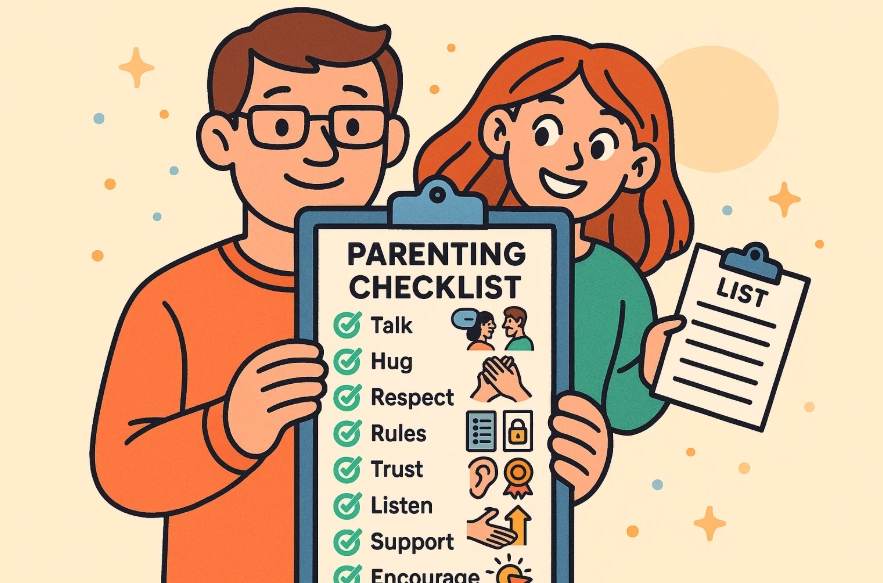
Try this instead. The 10-Minute Car Rule. Some of the best talks happen side-by-side, not face-to-face. Driving to practice? Don't turn off the radio and launch into The Big Talk. Sit in silence for a bit. Comment on a song. Ask an open-ended, low-pressure question about her friend's weekend, not hers. The lack of eye contact lowers the threat level. I got more out of my daughter about her social anxieties during drives to soccer than in a year of scheduled "How was your day?" dinners.
Listen for the emotion, not just the words. When she vents "Ugh, Sarah is so annoying!" she's rarely asking you to solve it. She's asking you to hear her frustration. Responding with "Well, have you tried..." shuts her down. Try "That sounds really frustrating," or "Tell me more." You validate the feeling first. Solutions can come later, if she even wants them.
How to Ask Questions She Might Actually Answer
"How was school?" = "Fine." Dead end.
You need specific, curious, and sometimes silly questions.
- "What was the most boring part of your day?" (This often gets a real, funny answer.)
- "If your school day was a movie scene, what would it look like?"
- "Did anyone do or say something today that made you laugh?"
The goal isn't an interrogation. It's to signal you're interested in her world, not just her grades or chores.
Setting Boundaries That Actually Stick
Teens need walls to bounce off of. Without boundaries, they feel insecure, even if they'd never admit it. The key is to frame rules as safety measures, not arbitrary power plays.
Here's a practical framework I stole from a family therapist: For any issue, decide if it's a Hard Limit (non-negotiable safety/health), a Soft Limit (important family values, negotiable within reason), or a No-Limit Zone (her personal preference).
Let's apply it to the classic battle: phone use at night.
- Hard Limit: No phones in the bedroom after 10 PM. (Reason: Sleep hygiene is a health issue. The CDC links poor sleep to mental health struggles in teens.)
- Soft Limit: Where does the phone charge? Kitchen counter? Living room? Negotiate the spot.
- No-Limit Zone: What case she uses, her wallpaper, most of her app choices (with monitoring for safety).
This makes the rule about the why (your care for her health), not the what (you taking her phone). Enforce the Hard Limit consistently. Be flexible on the Soft ones. It gives her a sense of agency where it's safe to have it.
The Slow Burn of Building Trust
Trust isn't given; it's earned in small moments. And you have to give it to get it. This means letting her handle situations you know she might slightly fumble.
My daughter wanted to go to a weekend movie with friends at a mall 30 minutes away. Every cell in my body wanted to say no. Instead, we made a plan. She had to:
- Map the route and parking with me.
- Check in via text when she arrived and when the movie started.
- Have her location sharing on (we agreed this was for safety on trips, not for daily spying).
- Be home by the agreed time.
She did it all perfectly. That one success did more for our trust dynamic than a hundred lectures on responsibility. It proved she could handle it and that I could trust her. Look for these "trust tests"—small, supervised opportunities for independence.
A common mistake is using "trust" as a reward for good behavior. "If you get your grades up, I'll trust you more." That's backward. Trust is the frameworkwithin which she learns responsibility. You extend a little trust first (within safe boundaries), which encourages the responsible behavior you want to see.
Navigating the Social Media Minefield
Banning it outright often backfires, making it a forbidden fruit. Your job is to teach digital literacy, not just impose a blockade. Have the awkward conversations. Not once. Regularly.
Sit down with her and look at her feeds together. Ask questions.
- "How do you feel when you scroll through this for an hour?"
- "Do you think that person's life really looks like that all the time?"
- "What's the difference between a funny meme and one that's actually mean?"
Discuss the permanent digital footprint. A report from the Pew Research Center highlights how teens themselves are concerned about privacy and oversharing. Frame it as you helping her protect her future self. Make a family media agreement—not just rules for her, but for you too (like no phones at dinner for anyone).
De-escalating the Inevitable Conflict
You will fight. The goal isn't to avoid conflict, but to navigate it without nuclear fallout. When the temperature rises, your number one tool is... pausing.
She says something designed to hurt: "You're the worst! You never let me do anything!" Your lizard brain wants to fire back. Don't.
Say this: "Wow, you're really upset right now. I'm going to take a few minutes so we don't say things we regret. Let's talk in 20 minutes." Then walk away. This does three things: 1) It models emotional regulation. 2) It removes the audience for the performance of anger. 3) It gives you both time to cool down. Come back later and address the core issue (her desire for more freedom) not the hurtful delivery.
The Repair Conversation
After the storm passes, reconnect. You can start. "Hey, about earlier... I'm sorry I raised my voice. That wasn't helpful. I was frustrated because I'm worried about your safety with that plan. Can we try to find a compromise?" This shows her that repair is possible and that your relationship is stronger than a single argument.
Your Evolving Role: From Protector to Coach
This is the heart of it. You're no longer the goalkeeper, blocking all shots. You're the coach on the sidelines, preparing her to play the game of life herself. Your job is to ask the right questions, help her weigh consequences, and be there when she makes a mistake—because she will.
She comes to you with a problem with a friend. Instead of "Here's what you should do," try "What are your options here?" and "What do you think the outcome of each choice might be?" It feels passive, but it's active coaching. You're building her problem-solving muscle. The American Psychological Association has great resources on adolescent development that underscore the importance of this supportive autonomy.
Celebrate the effort, not just the outcome. Got a B on a test she studied hard for? That's a win. Tried out for a team and didn't make it? The courage to try is the victory. This builds resilience far more than only praising perfect results.
Your Top Parenting Questions, Answered
My daughter shuts down every time I try to talk. What do I do?
Stop trying to have "talks." Switch to parallel activities. Work on a puzzle, cook a meal together, go for a walk. Communication often flows more easily when there's a shared, low-pressure task to focus on. The pressure of direct eye contact and expectation is what causes the shutdown. Let the conversation happen in the spaces between the activity.
How do I handle disrespectful tone and eye-rolling?
Address the behavior calmly and directly, but pick your battles. "The eye-roll makes me feel disrespected and makes it hard to hear what you're actually saying. Can you try saying that again in a calmer way?" If it's a constant issue, link it to a consequence related to the relationship. "It's hard for me to want to do favors (like a ride to your friend's) when our interactions feel so negative lately." Avoid power struggles in the moment—sometimes stating your feeling and walking away is more effective.
 She wants more privacy. How much is too much?
Privacy is a need; secrecy is a red flag. It's reasonable for her to have private thoughts, a diary, and closed-door time. It's not reasonable if she's hiding major changes in behavior, mood, or physical health. Frame your oversight as safety, not surveillance. "I won't read your texts, but I need to have your passwords and the right to check your phone if I have a serious safety concern. That's my job to keep you safe." The line is drawn at potential harm to herself or others.
What if my teenage daughter is lying to me?
First, understand the "why." Is it to avoid punishment? To protect your feelings? To gain freedom she thinks you'll deny? The response changes. If it's fear-based, you need to work on creating an environment where she can tell hard truths with proportional, not draconian, consequences. Lead with curiosity, not accusation. "I noticed the story about where you were last night doesn't add up. I'm more concerned about why you felt you couldn't tell me the truth than about the thing itself. Can we talk about that?" Punishing the lie without addressing the underlying reason just teaches her to be a better liar.
The journey of parenting a teenage daughter is messy, humbling, and surprisingly beautiful. It's a long-term project measured in small wins: a shared laugh, a genuine conversation, seeing her handle a tough situation with the tools you've quietly helped her build. Don't aim for a perfect relationship. Aim for a connected, resilient one. Put these parenting tips into practice one at a time. Start with listening in the car. The rest will follow.
Reader Comments